



Japanese vs German Cars: Reliability and Performance Comparison
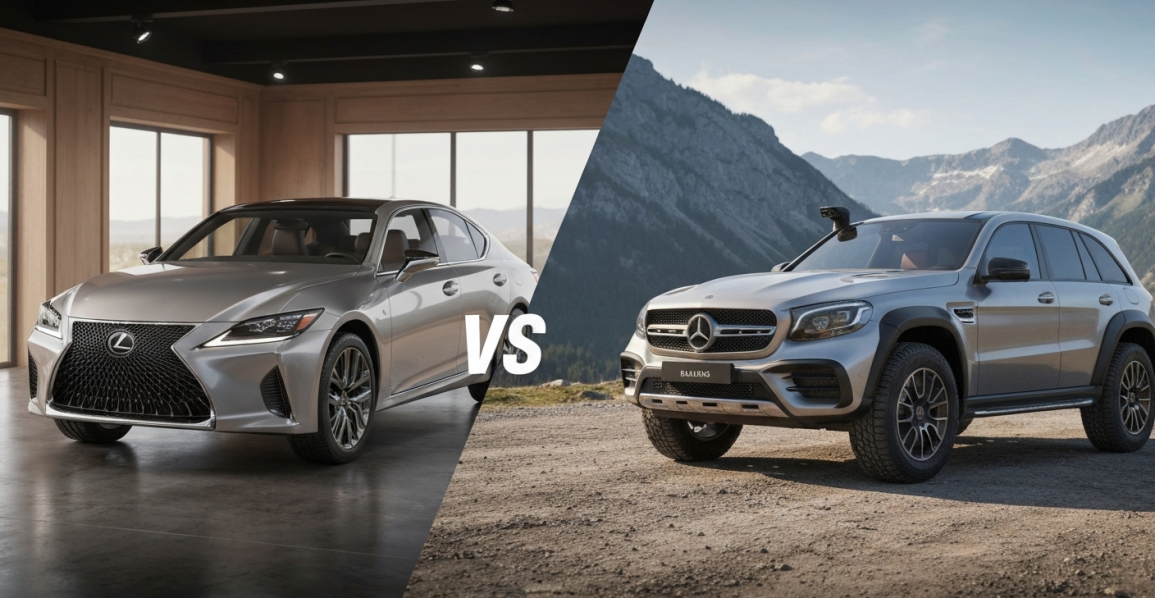
Reliability or driving pleasure? Pragmatism or emotion? Trouble-free operation for years to come or cutting-edge technology here and now? This choice is the essence of the eternal confrontation between automotive worlds. The eternal dilemma: german cars vs japanese cars. For decades, buyers around the world have been "breaking spears," proving the superiority of their favorite school of automotive engineering.
In 2025, this dispute has not only not subsided but has become even sharper. The Japanese have learned to make exciting and stylish cars. The Germans have improved their reliability. And hybrid technologies and turbocharging have completely shuffled the deck. Old stereotypes no longer work. To make the right choice today, you need to cast aside prejudices and look at the facts.
Right now, we want to present you with an expert analysis – an impartial study of two philosophies. We will delve into the historical roots, compare reliability statistics, evaluate performance, and calculate the real cost of ownership. You will receive all the necessary data to decide for yourself who wins the battle of german vs japanese cars.

History and Production Philosophy
Different cultures – a different approach to creating cars. To understand modern automobiles, you need to look into their past.
The Japanese Approach: Evolution and "Kaizen"
At the heart of the Japanese auto industry lies the philosophy of "Kaizen" – continuous improvement. Instead of revolutionary leaps, there is daily, methodical work on improving quality and eliminating defects. The Toyota Production System, built on the principles of leanness and waste minimization, has become a benchmark for the entire world. For decades, Japanese engineers have been refining simple and reliable designs, bringing them to perfection. Their goal is to create a car that will not fail. Ever.
The German Approach: Engineering and "Vorsprung durch Technik"
German automotive engineering grew out of the traditions of precision engineering. At its core is engineering excellence and the desire to be one step ahead. "Advancement through Technology" (Vorsprung durch Technik) is a slogan from Audi and, at the same time, the motto of the entire industry. German engineers are not afraid of complex and innovative solutions. They are the first to introduce turbocharging, robotic gearboxes, and complex multimedia systems. Their goal is to create a car that impresses. With technology, dynamics, and status.

Leading Brands and Their Features
Each brand is the face of its school, with its own unique character.
Top japanese car brands:
- Toyota. Synonymous with reliability. Practical, durable, and liquid cars on the secondary market.
- Honda. Innovative VTEC engines, a sporty spirit, and high build quality.
- Nissan. A focus on bold design and modern technologies, often at an affordable price.
- Mazda. The "Zoom-Zoom" philosophy – driving pleasure and premium design in the mass segment.
- Subaru. Signature symmetrical all-wheel drive and the highest level of safety.
- Lexus / Infiniti. Premium brands of Toyota and Nissan, offering luxury and comfort backed by Japanese reliability.

Flagships of the German Auto Industry:
- BMW. "Sheer Driving Pleasure." The benchmark for handling, powerful engines, and a driver-focused character.
- Mercedes-Benz. Luxury, comfort, and innovation. Status and cutting-edge technology in every detail.
- Audi. Quattro all-wheel drive, technological design, and the highest quality interiors.
- Volkswagen. "The People's Car." German quality and engineering, accessible to the mass buyer.
- Porsche. An icon of sports cars. A combination of racing technology and everyday practicality.

Detailed Reliability Comparison
Reliability is the main trump card of Japanese brands. But is the difference really that big today? Let's turn to the statistics of independent agencies, such as the American Consumer Reports and J.D. Power.
According to recent studies (2023–2025), the top 10 most reliable brands traditionally include Lexus, Toyota, and Mazda. However, in recent years, BMW and Porsche have caught up, showing significant improvements in quality. Mercedes-Benz and Audi show average results, while Volkswagen often finds itself at the bottom of the rankings due to problems with electronics and DSG robotic gearboxes.
Typical Problems:
- Japanese cars. Rare but possible problems with CVTs in some Nissan models. The paintwork is traditionally thinner than on "German" cars.
- German cars. Complex turbo engines require high-quality fuel and oil. Problems with electronics and rapid stretching of timing chains in some VAG engines.
In terms of longevity and resource, Japanese naturally aspirated engines and classic automatic transmissions are still considered more durable, capable of covering 300,000–400,000 kilometers without a major overhaul.
Performance and Dynamics
Historically, the Germans have dominated here, but the Japanese are actively closing the gap.
- Power. German manufacturers have focused on turbocharging, which provides high torque at low revs. The Japanese remained faithful to reliable naturally aspirated engines for longer, but now they are also actively using turbo technologies (for example, Honda and Mazda).
- Handling. German cars, especially BMW and Porsche, offer more precise and "driver-focused" steering. Their suspension is often stiffer, tuned for active driving. Japanese cars (with the exception of sports models) traditionally focus on comfort, offering a softer and more energy-absorbent suspension.

Technological Innovations
Both schools are technological leaders, but their priorities differ.
Japanese Technologies:
The Japanese are pioneers and leaders in the field of hybrid power units (Toyota Hybrid System). They also pay great attention to comprehensive safety systems, such as Toyota Safety Sense and Honda Sensing, making them standard equipment even on budget models.
German Innovations:
The Germans are traditionally strong in chassis engineering (Quattro all-wheel drive), advanced multimedia systems (BMW iDrive, Mercedes MBUX), and comfort technologies (air suspension, matrix headlights). They are also leaders in the development of powerful and efficient turbo engines.
Cost of Ownership
|
Parameter |
Japanese Cars |
German Cars |
Winner |
|
Purchase Price |
Lower (in similar trims) |
Higher |
Japan |
|
Maintenance Cost |
Lower |
Higher |
Japan |
|
Parts Prices |
Lower |
Higher |
Japan |
|
Fuel Consumption |
Lower (especially hybrids) |
Higher (in powerful versions) |
Japan |
|
Resale Value |
Higher (depreciate slower) |
Lower |
Japan |
As can be seen from the table, based on the aggregate of factors, owning a Japanese car is on average cheaper. They lose less value, which makes them a more profitable long-term investment.
Comparison by Car Classes
Compact Cars (Corolla vs. Golf). The Toyota Corolla wins with the reliability and economy of its hybrid. The VW Golf responds with a higher-quality interior and better handling. Mid-size Sedans (Camry vs. Passat). The Toyota Camry is about comfort and phenomenal reliability. The VW Passat offers more technology and a more spacious interior. Crossovers (RAV4 vs. Tiguan). The Toyota RAV4 is a bestseller thanks to its efficient hybrid and liquidity. The VW Tiguan attracts with its strict design and premium feel. Premium Segment (Lexus LS vs. Mercedes S-Class). Lexus offers absolute reliability and silence. Mercedes offers cutting-edge technology and status.
Eco-friendliness and the Future

Both schools are actively moving towards electrification. The Japanese have focused on the mass adoption of hybrids, gradually transitioning to fully electric models. The Germans, on the other hand, have invested billions in creating entire electric lineups (VW ID, BMW i, Mercedes EQ), aiming to become leaders in the new market.
Buying Recommendations
The choice between the two schools is a choice of priorities.
Japanese cars are for you if:
- Reliability and low running costs are your top priority.
- You are looking for a practical family car for everyday use.
- You plan to own the car for a long time (7+ years).
German cars are your choice if:
- Driving pleasure and dynamics are most important to you.
- You value prestige, status, and cutting-edge technology.
- You are willing to pay more for a premium feel and plan to change cars every 3–5 years.
Myths and Reality

"Japanese cars are boring." A myth. Modern Mazda, Honda, and even Toyota offer striking designs and engaging handling.

"German cars are unreliable." Partially true. Complex technologies require quality maintenance. But with proper care, modern BMWs and Porsches show excellent results.
Conclusion and Final Recommendations
In the eternal dispute of german cars vs japanese cars, there is no single winner. There are two different paths, each leading to the creation of excellent machines. The Japanese path is one of evolution, reliability, and pragmatism. The German path is one of engineering, emotion, and technology.
The choice depends on what you value more. If a car for you is a reliable tool for solving everyday tasks, pay attention to japanese car brands. If a car is a source of pleasure, status, and emotion, your choice is among the flagships of the German industry. Ultimately, the best car in the battle of german vs japanese cars is the one that best matches your values.

