



Revolution of the Year: Solar Panels on Cars in the Automotive Industry
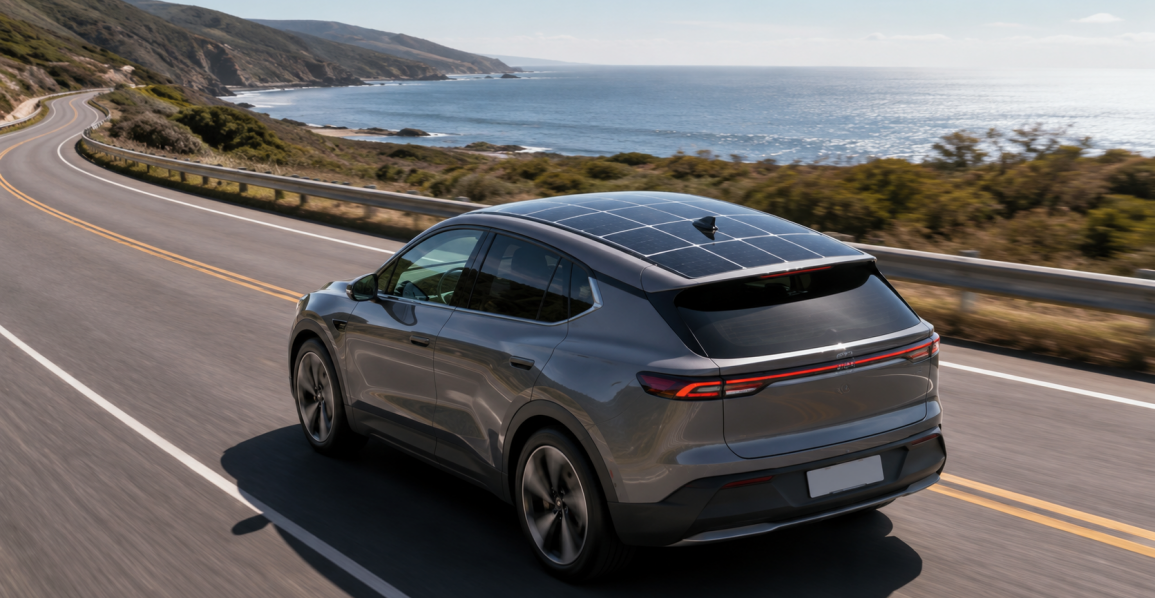
In 2025, the automotive industry is experiencing a new stage of development, driven by the active integration of solar technologies. Solar energy is ceasing to be just an auxiliary power source and is beginning to play a key role in vehicle design and operation. The era of the solar electric car is dawning.
From Concept to Reality: The Evolution of Cars with Solar Panels
Just 10 years ago, cars with solar panels were considered a futuristic idea. Today, this direction has turned into a real trend in the global auto industry. In 2025, solar electric car models are becoming an important market segment.
Why Solar Electric Car is Becoming Mainstream
Growing interest in sustainable mobility, stricter environmental regulations, and the desire to reduce dependence on fossil fuels are making cars with solar panels attractive to both buyers and manufacturers.
Market Growth Statistics and Technology Development Forecasts
According to the IEA, in 2024, the number of electric vehicles worldwide exceeded 40 million. The forecast for 2030 is more than 200 million units, a portion of which will be equipped with solar panels. A key trend is the integration of solar roofs and panels into mass-produced models.
Environmental and Economic Advantages
Cars with solar panels simultaneously improve the environmental situation and allow owners to save money. Reducing the carbon footprint is achieved by reducing fossil fuel consumption, while the additional range provides greater autonomy. As a result, solar cars are becoming not only a symbol of the "green" movement but also a rational choice.
How It Works: The Principles Behind Cars with Solar Panels

Cars with solar panels use photovoltaic cells (or solar cells) that convert sunlight into electricity. These panels are typically installed on the roof, hood, or other flat surfaces of the vehicle. When photons from sunlight hit the panels, they excite electrons, creating an electric current.
Photovoltaic Cell Technology in the Automotive Industry
Photovoltaic (PV) cell technology in the automotive industry involves integrating solar panels into the car's body, most often on the roof, to convert sunlight into electricity. This energy is used to power auxiliary systems, such as cabin ventilation, charging the 12-volt battery, and in some cases, for partially recharging the EV's traction battery. Although modern PV systems cannot fully power a car, they reduce the load on the main engine or battery, contributing to improved fuel efficiency and increased range.
Integration of Solar Panels into Body Design
Modern panels can be installed on the roof, hood, trunk, and even car doors. This allows for maximum use of the surface area.
Energy Storage and Distribution Systems
Energy is stored in lithium-ion batteries and distributed through inverters to power the engine and onboard electronics. This architecture increases the vehicle's efficiency.
Interaction with Traditional Powertrains
They serve as an auxiliary energy source. Solar panels located on the roof or body are used to power onboard systems such as air conditioning, ventilation, or multimedia. This reduces the load on the main internal combustion engine, as it does not need to expend fuel to generate electricity for these systems. As a result, fuel economy improves, and in hybrid and electric vehicles, additional solar charging of the battery increases the range.
Types of Solar Automotive Systems
There are several types of solar automotive systems, which have a number of differences.
Auxiliary Systems – Powering A/C, Electronics, Lighting
Panels have relatively low power and power electronics, climate control, or lighting. This reduces the load on the main battery and extends its life. Despite limited capabilities, they help save energy and improve comfort for the driver and passengers.
Hybrid Solutions – Combination with ICE and Electric Motors
Hybrid solutions combine the use of solar panels with traditional internal combustion engines and electric motors. In this scheme, solar energy serves as an additional power source, reducing fuel consumption and increasing range. These systems are being actively introduced into mass-market cars, as they do not require a complete abandonment of existing technologies.
Fully Solar-Powered Cars – Concepts and Production Models
Fully solar-powered cars are still rare on the market, but they demonstrate enormous potential. Such vehicles receive all the necessary energy from built-in panels and do not require frequent grid charging. Production models have already proven that the technology works in real-world conditions. Their efficiency depends on the climate and operating conditions, but even in temperate zones, they can provide significant autonomy. Concepts show that in the future, cars could become completely independent of external infrastructure.
Car with Solar Panel Roof – Integrated Roof Panels
The most common application of the technology is solar panels integrated into the car's roof. They combine efficiency and convenience, as the roof has sufficient area and is always exposed to direct sunlight. Such panels can provide up to several dozen kilometers of additional range per day. Manufacturers are actively using this approach in production models. Roof panels fit organically into the car's design without disrupting its aerodynamics. In the future, their power and efficiency will only increase, making the solution even more popular.
Removable/Portable Panels – Flexible Charging Solutions
Removable and portable panels have become an interesting addition to stationary solutions. They allow charging the car under any conditions. Such panels are usually made of flexible materials, simplifying their transportation and installation. Their power is lower compared to integrated systems, but their mobility makes them indispensable in a number of situations. EV owners use portable panels as a backup power source. Collectively, this direction expands the possibilities of operating solar cars.
Top 10 Production Cars with Solar Panels

|
№ |
Model |
Feature |
|
1 |
Toyota Prius Prime |
First mass integration of a solar roof |
|
2 |
Hyundai Sonata Hybrid |
Battery charging from a solar sunroof |
|
3 |
Mercedes-Benz S-Class |
Premium panels with high efficiency |
|
4 |
BMW i3 |
Optional solar modules |
|
5 |
Nissan Leaf |
Aftermarket add-on solutions |
|
6 |
Audi A8 |
Luxury roof with solar elements |
|
7 |
Karma Revero |
Design with panels on the hood and roof |
|
8 |
Lightyear 0 |
Up to 70 km per day from the sun |
|
9 |
Sono Sion |
Panels across the entire body |
|
10 |
Aptera |
Aerodynamic three-wheel design |
Each of the listed cars reflects a different approach to integrating solar technologies—from auxiliary systems to fully innovative solutions.
Conceptual and Experimental Models
|
Model/Project |
Features |
|
Lightyear One |
Record range of up to 725 km on solar power |
|
Solar Team Eindhoven |
Experimental racing developments |
|
Stella Era |
Family car on solar batteries |
|
World Solar Challenge |
Competitions accelerating technology development |
|
Tesla, Ford, GM прототипы |
Future models being tested in laboratories |
This table clearly demonstrates the variety of conceptual solutions and their contribution to the industry's development. Some projects are focused on records and competitions, others on mass application in the future.
Technical Specifications and Efficiency
Technical parameters determine the real value of cars with solar panels. From power and energy conversion efficiency to the influence of weather and regional characteristics—all these factors shape the practical benefits of the technologies.
Solar Panel Power: From 100W to 1000W+
Modern cars with solar panels are equipped with modules of various power. Auxiliary systems typically use 100–200 W panels, while full-size solutions reach over 1000 W. The higher the power, the more energy can be accumulated per day. Capabilities are limited by the surface area of the car body.
Conversion Efficiency: Modern Indicators
The efficiency of photovoltaic cells determines what percentage of solar energy is converted into electricity. In 2025, commercial panels achieve an efficiency of 24–26%. This is significantly higher than a decade ago, when efficiency rarely exceeded 15%. Technological innovations in materials are gradually approaching 30% and above. Increasing efficiency is becoming the main factor in the growth of vehicle effectiveness.
Impact of Weather Conditions on Performance
The performance of solar panels directly depends on lighting conditions. On sunny days, they operate at maximum power, while on cloudy days their efficiency drops by 50% or more. In winter in northern regions, performance also decreases due to the short daylight hours. The accumulation of dust, dirt, or snow on the surface further reduces generation. Therefore, regular cleaning of the panels is important for stable operation.
Geographical Features of Use
Geography plays a decisive role in the efficiency of solar cars. In countries with high levels of insolation, such as Australia or the UAE, a car can get up to 30–40 km of range per day from the sun alone. In temperate zones, the figures are lower, but even there, panels make a significant contribution to energy savings. In northern countries, solar panels serve more as an auxiliary source.
Comparative Analysis with Grid Charging
|
Charging Method |
Range Gain per 1 Hour |
Features |
|
Solar Panels |
5–10 km |
Weather dependent, free energy |
|
Home Socket (AC) |
15–20 km |
Available to most owners, slow |
|
Fast Charging Station |
up to 300 km |
High power, requires developed infrastructure |
Practical Advantages of Cars with Solar Roof
Let's name the real advantages of the technology.

Fuel Economy – Real Numbers and Calculations
|
Parameter |
Value |
|
Additional annual range |
1000–1500 km |
|
Gasoline savings |
60–90 liters |
|
Electricity savings (EV) |
180–250 kWh |
|
Reduction in fuel costs (avg) |
up to 15–20% per year |
Increased Range – Additional Kilometers from the Sun
Every hour the car spends in the sun can add from 5 to 10 km to its range. In regions with high insolation, this is up to 30–40 km per day without connecting to the grid. Such an increase is especially useful for urban trips, where the average daily mileage is relatively low.
Autonomy – Charging Capability Away from Infrastructure
Solar panels give the car the ability to recharge even far from urban power grids. The ability to replenish some charge away from charging stations increases confidence in operation. This expands the geography of electric vehicle use.
Emission Reduction – Environmental Contribution
The use of solar panels reduces the carbon footprint of the transport sector. Every kilometer obtained from the sun means fewer CO₂ emissions compared to using an internal combustion engine. Their contribution to ecology can become significant with mass adoption.
Cabin Cooling – Additional Function of Panels
Some solar systems are used to power ventilation and air conditioning while parked. This reduces cabin heating in summer and makes using the car more comfortable. Additionally, this function reduces the load on the main battery.
Limitations and Challenges of Modern Technologies
The technology also has some limitations.
Limited Vehicle Surface Area
The limited body area does not allow for the placement of high-power panels. Even the roof and hood can only accommodate a limited number of modules. This reduces the energy generation potential and makes panels more of an auxiliary rather than a primary power source.
Dependence on Weather Conditions and Time of Day
Such cars show maximum efficiency only on clear days. During cloudy weather or at night, their performance tends to zero. This dependence makes it necessary to combine panels with other energy sources.
High Cost of Integration and Production
Embedding solar panels into the body increases the cost of the vehicle. New materials and thin-film panels are especially expensive. High price remains a key barrier to mass adoption.
Weight and Impact on Aerodynamics
Additional panels increase the vehicle's weight and can affect its aerodynamics. This reduces overall efficiency and requires engineering solutions to minimize losses.
Complexity of Maintenance and Repair
Integrating panels into the body complicates car repairs. Replacing a damaged panel can be costly and require specialized service. This increases the operating costs for owners.
Innovations and Future Technologies
What does the future hold for the technology?
Flexible Solar Panels – New Materials and Shapes
New flexible materials allow panels to be placed on curved body surfaces. Such panels are lighter and more resistant to damage.
Transparent Photovoltaic Elements – Integration into Glass
Transparent solar modules can be embedded in windshields and side windows. This turns the entire surface of the car into an energy source. The solution is already being tested on concepts and promises a significant increase in efficiency.
Artificial Intelligence – Energy Consumption Optimization
AI algorithms analyze light levels, route, and vehicle needs. This allows for the most rational distribution of energy. In the future, AI will become a key tool for improving the efficiency of solar systems.
Vertical Panels – Using Side Surfaces
Vertical modules capture reflected light, increasing overall efficiency. This approach makes the car more energy-efficient under any conditions.
Wireless Energy Transfer – From Panels to Batteries
The future is also associated with wireless technologies. Panels will be able to directly transfer energy to batteries without complex wiring. This will simplify the design and reduce the risk of breakdowns.
Market Situation and Manufacturers
How is the situation in 2025?
Leading Companies in the Solar Panel Car Segment
Today, the market is led by companies like Lightyear, Sono Motors, and Aptera. Major concerns such as Toyota, Hyundai, and Mercedes-Benz are integrating panels into production models. This confirms the growing interest in the segment.
Cost of Integrating Solar Technologies
Adding solar panels increases the price of a car by an average of $3,000–$6,000. However, with long-term operation, some of the costs are recouped through fuel savings.
Government Support Programs and Subsidies
Many countries have subsidies for the purchase of electric vehicles with solar panels. Government support stimulates demand and accelerates the adoption of technologies. Such measures are particularly effective in Europe and Asia.
Regional Differences in Adoption Rate
Adoption is faster in countries with high levels of solar radiation. For example, demand is higher in California and Australia than in Northern Europe. This is due to both climate and cultural factors.
Partnerships Between Automakers and Solar Companies
Many automakers are entering into agreements with companies specializing in solar energy. This allows for combining experience and accelerating the introduction of innovations. Partnerships are becoming a key factor in market development.
Infrastructure and Ecosystem
Compatibility with Existing Charging Infrastructure
Cars with solar panels remain compatible with conventional charging stations. This allows for a hybrid charging approach.
Smart Grids and Vehicle-to-Grid (V2G) Technologies
Vehicle-to-Grid technologies allow a car to feed accumulated energy back into the grid. This makes solar cars an element of the energy ecosystem. Such solutions increase the value of these vehicles for society.
Home Solar Systems as a Supplement
Home solar stations can work in tandem with cars. This provides owners with complete energy autonomy. As a result, a sustainable "home-car" ecosystem is formed.
Service Centers and Specialized Maintenance
Specialists are needed to service solar components. Service centers specializing in such solutions are gradually appearing. This increases the reliability and convenience of operating vehicles.
Insurance and Warranty for Solar Components
Insurance companies are beginning to offer separate products for owners of solar cars. Warranties for panels range from 5 to 10 years. This reduces risks and makes the purchase more attractive.
Regional Application Features
Sunny Regions – California, Australia, Middle East:** In regions with high solar activity, cars with panels are most effective. They can get up to 40 km of range per day from the sun alone. This makes them particularly in demand in the southern US and Persian Gulf countries.
Northern Countries – Technology Adaptation for Low Insolation
In northern latitudes, solar panels provide less energy. However, even there they are useful for powering auxiliary systems. Technologies are gradually being adapted to low light conditions.
Urban vs. Rural Operation
In cities, such cars save energy in traffic jams and on short routes. In rural areas, panels are useful for charging away from infrastructure.
Commercial Transport – Trucks and Buses with Panels
Solar panels are also beginning to be used on commercial transport. Trucks and buses receive additional power for electronics and air conditioning. This reduces their operating costs.
Cultural and Legislative Features
Legislation in different countries stimulates the use of solar technologies differently. Cultural factors also influence the perception of innovation. Where the level of environmental awareness is high, adaptation proceeds faster.
Practical Guide for Buyers
How to Choose a **Car with Solar Panel Roof
The buyer should consider the power of the panels, their efficiency, and the warranty. Compatibility with charging infrastructure and service support are equally important.
ROI Calculations and Investment Payback
Return on investment depends on the region and style of operation. In sunny countries, payback occurs faster—on average in 5–7 years. In temperate regions, the period may increase to 10 years.
Criteria for Evaluating System Efficiency
Key criteria are power, efficiency, and reliability of the panels. Integration with the battery and auxiliary systems should also be considered. The higher the efficiency, the greater the benefit.
Maintenance and Operation
Regular cleaning of panels from dirt and snow increases their productivity. Only certified service centers should be used. This extends the equipment's lifespan.
Aftermarket Solutions vs. Factory Options
Aftermarket panels are cheaper but may be less reliable. Factory-integrated systems are more expensive but come with a warranty and better compatibility. The choice depends on the owner's budget and priorities.
Conclusion: The Future of the Solar Electric Car Industry
Technology Development Forecasts for 5-10 Years
In the coming years, an increase in panel efficiency and a decrease in integration costs are expected. Technologies will become more accessible to the mass consumer.
Potential for Cost Reduction and Mass Adoption
Mass production and innovations in materials will reduce the price of cars. This will accelerate the spread of **solar panel car** models on the global market.
Role in Achieving Carbon Neutrality in Transport
Solar cars will become an important element of the decarbonization strategy. They will help reduce CO₂ emissions and reduce dependence on fossil sources.
Integration with Renewable Energy
The combination of cars and home solar stations will create a sustainable energy ecosystem. This will increase owner autonomy and reduce the load on power grids.
Why Solar Panels on Cars are an Inevitable Future
The trend towards environmental friendliness and technological innovation makes solar cars a promising direction. Despite the limitations, technological development will lead to their mass adoption. The advantages of a solar electric car are becoming undeniable for a sustainable future.

