



What Is a Starter in a Car and How Does It Work?
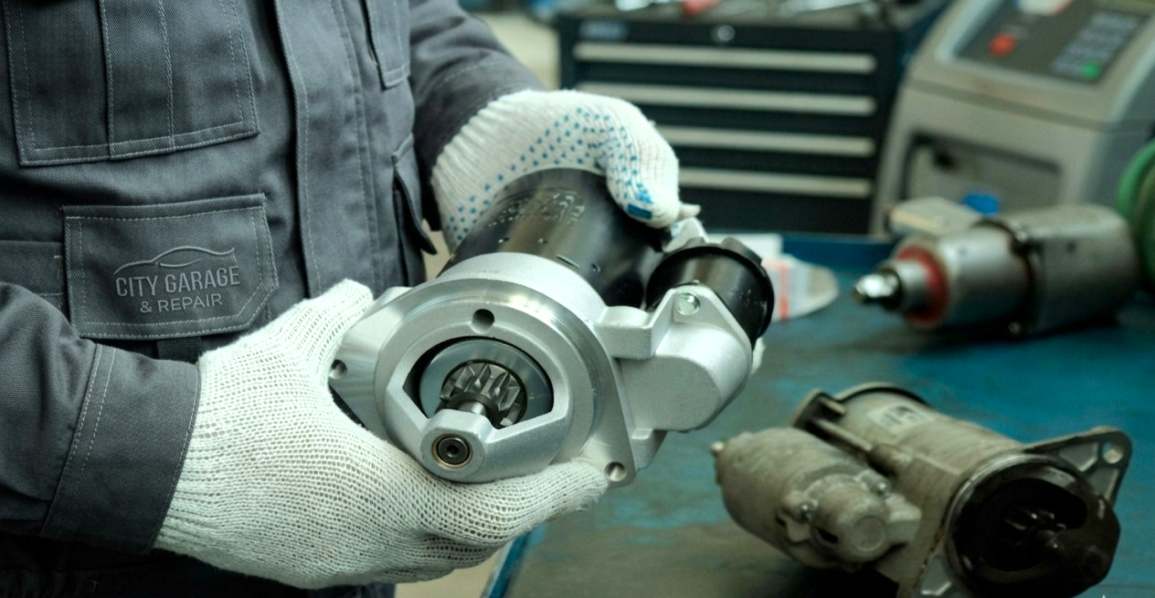
When you get behind the wheel and press the start button, a complex engineering system activates instantly. At the heart of this process is the automotive starter—a high-torque electromechanical unit tasked with the colossal job of bringing the internal combustion engine to life. Understanding how a car starter works, what it consists of, and why proper maintenance is vital will help any vehicle owner avoid costly repairs and unpleasant surprises on the road.
What is a Starter and Its Role in a Vehicle?
At its core, the starter serves as the bridge between the vehicle's electrical system and its mechanical "heart." In simple terms, it is a powerful DC electric motor designed for short-term operation. The primary task of this device is to crank the engine's crankshaft to a specific RPM threshold necessary for the internal combustion cycle to begin on its own.
Many drivers ask: what is a starter in a car from a physics perspective? An internal combustion engine (ICE) cannot start from a standstill by itself. For the first compression stroke to occur and for a spark to ignite the fuel mixture, the pistons must be set in motion. The starter overcomes frictional resistance, static inertia, and cylinder pressure to create the necessary torque. Once the engine begins running autonomously, the starter’s job is done, and it disengages.
Main Components of a Starter
Over decades of evolution, the design of the standard starter motor has become a benchmark of reliability while maintaining a clear division of functional zones. Each element performs a strictly defined task:
- DC Electric Motor. The main power unit, consisting of a stator (windings or permanent magnets) and a rotor (armature). This is where electrical energy from the battery is converted into rotational motion.
- Bendix (Drive Pinion and Overrunning Clutch). A complex mechanical assembly with a drive gear. It is responsible for temporarily engaging the starter with the engine's flywheel and prevents the rotation of the already-running engine from being transmitted back to the starter.
- Solenoid (Starter Relay). An electromagnetic device mounted on top of the housing. It acts as a heavy-duty switch and simultaneously pushes the Bendix forward to engage with the flywheel.
- Housing and Bushings. A rugged metal shell protects internal components from dirt, moisture, and mechanical damage, while bushings ensure smooth shaft rotation with minimal friction.
The arrangement of these components is engineered to provide maximum power within the smallest possible footprint.
How a Starter Works
The engine starting process takes only one to three seconds, but during this window, the starter goes through a precise sequence of phases. Understanding this algorithm allows you to pinpoint a failure even by the sound it makes.
First, when the ignition key is turned or the Start button is pressed, current from the battery flows to the solenoid's control winding. Under the influence of a magnetic field, the solenoid plunger is pulled in, pushing the Bendix toward the flywheel via a lever. As soon as the Bendix gear meshes with the flywheel teeth, the solenoid plunger closes the heavy-duty electrical contacts (often called "contact discs").
At this moment, maximum current is supplied to the main electric motor, and the starter begins to crank the crankshaft. Once the first ignitions occur in the cylinders and the engine "picks up" speed, the flywheel's rotation speed exceeds that of the starter. The Bendix overrunning clutch then kicks in: it allows the gear to spin freely so that the engine's RPMs don't tear the starter apart from the inside. When the driver releases the key, the solenoid is de-energized, and a return spring pulls the gear back to its original position.
The Starter's Electrical Circuit
The electrical portion of the starter is a zone of extreme stress. Since cranking currents can reach 300–800 amps (depending on engine size and ambient temperature), power is supplied via a large-gauge cable directly from the battery.
In traditional systems, the control circuit includes the ignition switch, relays, and fuses. However, in modern vehicles, it is more sophisticated. The table below describes the key elements of the control chain:
Element | Role in the System |
Battery | The energy source; its health is critical for cranking speed. |
Starter Relay | Relieves the load on the ignition switch contacts to prevent burnout. |
Power Cables | Transmit massive current; corroded terminals are the top enemy of starting. |
Control Unit (ECU) | In new cars, it monitors starter run-time and blocks operation if errors occur. |
CAN Bus | Transmits digital signals between safety systems and the starter. |
Integration into the CAN bus allows electronics to block starting if the brake pedal isn't depressed, the gear selector isn't in "P" (Park), or the immobilizer hasn't recognized the key.
Mechanics and Power Transfer
The mechanical interface is the most stressed part of the process. The starter pinion gear is significantly smaller than the engine flywheel, creating the gear ratio necessary to multiply torque. However, this engagement requires absolute precision.
The teeth of both the flywheel and the Bendix have a specific chamfer to facilitate engagement. If these teeth wear down, starting is accompanied by a distinctive metallic grinding sound. The starter in a car plays a massive role here as the unit that absorbs primary impact loads. The overrunning clutch (Bendix) acts as a safety barrier: if it seizes, the centrifugal forces from the running engine would destroy the starter windings in seconds. Regularly checking the condition of the flywheel ring gear through inspection ports can prevent major breakdowns.
Signs of Starter Failure
Approaching failure can be identified by several symptoms. An observant driver will notice changes in the system's behavior long before the car finally refuses to start.
Key signs include:
- Clicking when turning the key. The solenoid is firing, but the armature isn't spinning (usually a contact or brush issue).
- Slow cranking ("labored"). Even with a charged battery, this points to worn bushings or an internal short circuit.
- Whirring without engine turnover. The Bendix is extending but not transmitting torque (worn overrunning clutch).
- Grinding during startup. Worn teeth or a loose starter housing.
- Burning smell. A clear sign of overheated windings or an internal short.
If you encounter any of these symptoms, it is best not to delay a service visit, as a sudden failure can happen at the worst possible time—such as in freezing weather or during a long trip.
Main Causes of Starter Breakdown
Why does a starter fail? There are several common causes, most of which are related to natural wear and tear or improper operation.
First is the wear of the carbon brushes and the commutator. Brushes transmit current to the rotating rotor and wear down over time, causing the contact to weaken and the starter to lose power. Second is the "pitting" or burning of the contact plates in the solenoid due to high-voltage arcing. Third is corrosion. The starter's location in the lower part of the engine bay makes it vulnerable to water and road salt, leading to oxidized contacts and a seized Bendix. Mechanical damage is also common due to prolonged attempts to start a frozen engine—the starter overheats and literally "burns out."
Maintenance and Prevention
To avoid a premature starter motor replacement, it is necessary to dedicate time to preventive measures. Many owners forget about this unit as long as it works, but minimal care can double its lifespan.
To maintain performance, it is recommended to follow these simple rules:
- Regularly (once a year) clean battery terminals and starter power contacts of oxidation.
- Check the tightness of mounting bolts—vibration can lead to housing misalignment.
- During routine maintenance, inspect the integrity of protective dust boots if equipped.
- Avoid prolonged starter operation (no more than 10–15 seconds per attempt).
- For mileages over 100,000 miles (150,000 km), it is advisable to perform a preventive overhaul involving brush replacement and Bendix lubrication.
These simple actions are inexpensive compared to the price of a new starter, yet they guarantee a reliable start in any weather.
Modern Technology and Starters
The automotive industry does not stand still, and traditional starters are gradually giving way to more complex systems. One of the major trends in recent years is the emergence of "Start-Stop" systems, which require the starter to have ten times the service life and speed.
In hybrids and modern premium vehicles, Integrated Starter Generators (ISG) are becoming more common. This device combines the functions of starting and power generation into one powerful brushless motor, integrated directly into the transmission or connected to the crankshaft via a reinforced belt. These systems allow the engine to start almost silently and instantaneously, while also providing energy recuperation during braking. Brushless motors with electronic control have no wearable brushes, making them incredibly durable, though significantly more complex to repair.
What to Do If You Have Starter Problems
If the car won't start, don't panic. First, check the battery charge level and the cleanliness of the terminals—in 50% of cases, the problem is simply a lack of current. If the power is fine but the starter is silent, you can try gently tapping the solenoid housing (this can temporarily "wake up" stuck contacts), but this is only a temporary measure to get you to a shop.
A vital warning for modern car owners: do not try to "clutch-start" or "bump-start" the vehicle. On cars with automatic transmissions, this is technically impossible. On manuals with modern fuel injection and electronic ignition, this method can lead to the timing belt skipping, catalytic converter damage, or software glitches. The safest and most correct path is professional diagnostics at a specialized center, where they will check not only the unit itself but the entire control circuit.
Conclusion
In summary, a functional starter in a car is the key to your peace of mind and mobility. Despite its seemingly secondary role after the engine has fired up, this unit is a sophisticated mechanism that unites the laws of electrical engineering and precision mechanics. Timely diagnostics, understanding the basic signs of wear, and avoiding extreme starting methods will allow you to significantly extend your vehicle's service life. Remember that prevention is always cheaper than repair, and knowing how starter motors work makes you a more responsible and prepared driver in today's world.

