



The Best Hatchbacks: The Ultimate Guide to Smart Urban Mobility
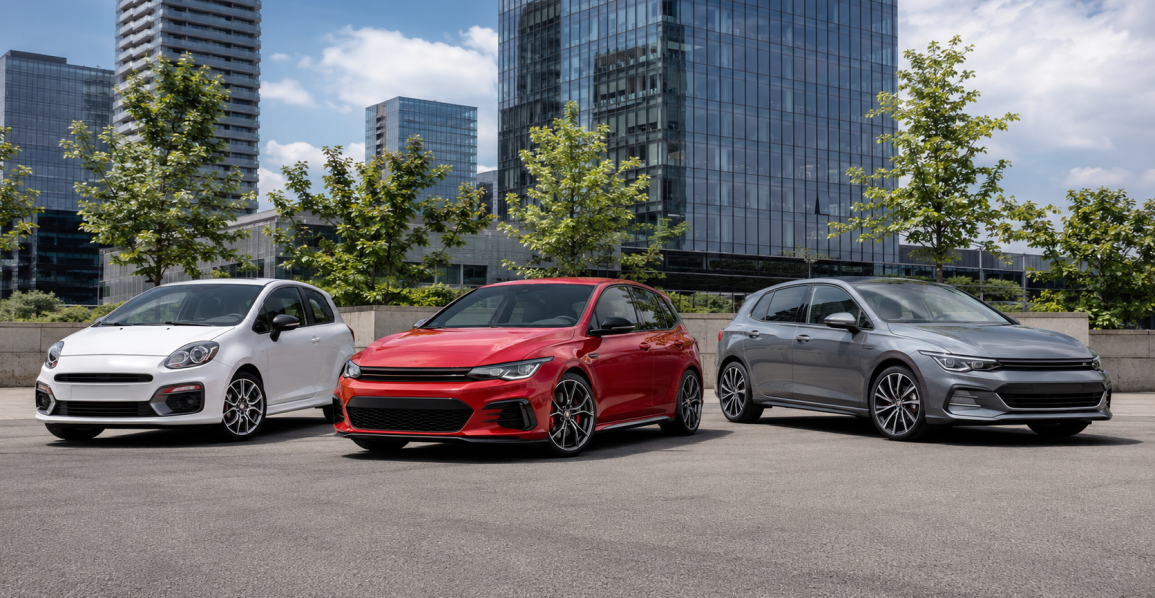
As strange as it may sound in a world where marketing departments aggressively push high-riding vehicles, crossovers have effectively seized a massive portion of the market. Meanwhile, the classic sedan remains a stubborn symbol of corporate status and executive tradition. However, when we step away from marketing brochures and look at real life in a modern metropolis, an understated but undeniable leader takes the stage: the hatchback.
Smart, pragmatic, and surprisingly versatile, the hatchback offers the "greatest hits" of all automotive body styles: the compactness required for tight city parking, the cargo capacity needed for weekly supermarket runs, and the agile handling dynamics that make country roads a joy to drive.
In 2025, hatchback cars are experiencing a genuine renaissance. They have ceased to be perceived merely as inconspicuous "entry-level cars" or budget compromises. Today, these are high-tech, stylish, and incredibly safe vehicles equipped with advanced hybrid powertrains, sophisticated Advanced Driver Assistance Systems (ADAS), and multimedia interfaces that rival those found in luxury limousines.
What exactly is the phenomenon behind these "grey cardinals" of the automotive world? Let’s dive deep into why they remain so highly demanded by millions of modern drivers. In the process, we will present the best hatchbacks of 2025 across various categories to help you choose the option that is 100% right for your lifestyle.

Hatchbacks Today: From "Economy Cars" to Smart Mobility
Over the last decade, the hatchback has undergone a massive evolutionary leap. It has transformed from simple, utilitarian transport into a complex, highly engineered product. The "cheap and cheerful" era is over; the era of smart mobility has arrived.
Modern models offer sophisticated powertrains, such as the hybrid systems found in the Toyota Yaris, which can achieve fuel consumption figures of less than 4 liters per 100 km in the urban cycle. Safety is no longer an option but a standard: comprehensive ADAS suites, including adaptive cruise control, lane-keeping assist, and automatic emergency braking, have become the norm even in the budget B-segment.
Design has also taken a monumental step forward. The angular, boring box shapes of the past have given way to bold, emotional lines and sculpted bodywork, exemplified by models like the Peugeot 208. Furthermore, the interior quality in top-tier versions of the Volkswagen Polo or Renault Clio utilizes soft-touch materials and digital cockpits that bring them dangerously close to the premium segment, challenging established luxury norms.
Under the Hood: What to Choose in 2025?
A modern hatchback offers three primary engineering paths, and the correct choice depends entirely on your driving environment and style:
- Small-Displacement Turbo Engines (1.0 – 1.5 liters): This is currently the "Gold Standard" for the European market. Thanks to advanced turbocharging technology, a modern 1.0-liter 3-cylinder engine (like those found in the VW Golf or Ford Focus) delivers the torque and dynamic performance of an old-school 2.0-liter naturally aspirated engine but weighs half as much.
- Pros: Excellent acceleration in city traffic, reduced weight over the front axle (improving handling), and lower road taxes.
- Cons: They are technically complex and more demanding regarding the quality of oil and fuel.
- Classic Naturally Aspirated Engines + CVT/Automatic: This is the choice for pragmatists, often found in models like the Mazda 3 or various Korean offerings. Without a turbocharger, they are slower off the line, but the resource lifespan of such engines is often higher due to lower internal pressures, and the mechanical design is simpler.
- The Verdict: Ideal for drivers who prefer a calm driving style and spend a lot of time in stop-and-go traffic.
- Mild and Full Hybrids (MHEV and HEV): Hatchbacks are the best candidates for electrification. Because the body is lightweight, it requires very little energy to get moving. In heavy traffic, a full hybrid can drive on electric power for 50% of the time with the internal combustion engine (ICE) turned off.
- The Math: This reduces fuel consumption to a laughable 3.5–4 liters. While more expensive upfront, this powertrain pays for itself if you drive more than 15,000 km per year.

Categories of the Best Hatchbacks
Not all hatchbacks are created equal. To help navigate the market, we have divided them into five main categories so you can find the model that perfectly answers your specific needs.
1. The Best City Hatchback Here, the A-segment and B-segment cars rule. The main criteria for success are a minimal turning radius for U-turns on narrow streets, excellent outward visibility, the presence of parking sensors and cameras, and low fuel consumption in "start-stop" traffic. Leaders: Kia Picanto, Hyundai i10.
2. The Best Family Hatchback A family car requires a different set of virtues: a spacious rear row for teenagers, easily accessible ISOFIX points for child seats, a large and practical boot (trunk), and—crucially—a 5-star Euro NCAP safety rating. Leaders: Skoda Octavia (technically a liftback, but functions exactly like a hatchback with massive utility), Honda Civic.
3. The Best Driver’s Hatchback These are the famous "Hot Hatches." They feature powerful engines, sharp steering ratios, stiffened suspension for cornering stability, and bolstered sports seats. They are engineered for pure driving pleasure. Leaders: Hyundai i30 N, Volkswagen Golf GTI, Honda Civic Type R.
Why is this cool?
The "Hot Hatch" is a unique phenomenon in the automotive world. It represents the most affordable way to access sports car dynamics. The secret lies not just in high horsepower, but in the Power-to-Weight Ratio. A lightweight hatchback with 200 horsepower will offer more adrenaline and agility in corners than a heavy premium sedan with 300 horsepower. Yet, the magic lies in their duality: press the "Eco" button, and you can quietly drive to the grocery store without sacrificing comfort. It is truly two cars in one.
- The Best Budget Hatchback This category is about getting the maximum amount of car for the minimum amount of money. The priority here is a low purchase price, cheap maintenance, and the widespread availability of spare parts. Leader: Dacia Sandero.
- The Best Hybrid and Electric Hatchback Focused on eco-friendliness and minimal operating costs. The key parameters here are real-world range and charging convenience. Leaders: Toyota Yaris Hybrid, MG 4 Electric.
Everyday Advantages of Hatchbacks
Why are hatchbacks so adored in Europe, and why are they perfectly suited for life in places like Cyprus? The answer lies in daily convenience. Their main strength is versatility, which manifests in the small details of ownership.
A hatchback allows you to easily maneuver and park in a tight city center on a Tuesday, and then on Saturday, fold down the rear seats to throw in two bicycles or a shelving unit bought at a furniture store to head off on an adventure. It is precisely this ability to adapt to different life scenarios—from routine commutes to spontaneous plans—that makes this body type so attractive and practical.

|
Advantage |
The Essence |
|
Boot Flexibility |
The large "fifth door" (tailgate) and split-folding rear seats allow you to transport bulky or odd-shaped cargo that would simply never fit through the narrow opening of a sedan's trunk. |
|
Urban Agility |
Short overhangs and compact overall dimensions make parallel parking and maneuvering in dense traffic significantly easier than in longer vehicles. |
|
Efficiency |
Lower weight and better aerodynamics compared to blocky crossovers ensure lower fuel consumption and, consequently, lower monthly expenses. |
|
Cost of Ownership |
Insurance premiums and the cost of consumables (e.g., tires) are generally lower for hatchbacks than for SUVs of a comparable size. |
The Hidden Economy: Where Do You Really Save?
Buying a hatchback saves your budget in ways that go beyond the gas pump. There are non-obvious expense categories where the difference compared to a Crossover (SUV) is colossal:
- Tires: This is one of the most expensive consumable items for any car owner. Hatchbacks typically use tires with a diameter of R16–R17. Modern crossovers often require R18–R19 rubber. The difference in price for a set of high-quality tires can reach 300–400 Euros.
- Car Wash and Detailing: At many car washes, hatchbacks are categorized as "small class" or "Category 1," which is often 20–30% cheaper than servicing a Jeep or a large sedan.
- Brakes: Due to their lower mass, brake pads and discs on a hatchback wear out much slower than on a heavy crossover, which requires much more energy to stop at every traffic light. Calculated over 3-5 years of ownership, a hatchback can save you an amount equivalent to the cost of a good vacation.
Expert Choice: The Best Hatchback Models of 2025
We have analyzed the market and selected seven models that are leaders in their segments, offering the best combination of price, quality, and technology.
A Myth About Safety: Does Size Matter?
There is a prevailing opinion that "the bigger the car, the safer it is." While this may have been true in the 1990s, technology has changed everything in 2025. Modern hatchbacks are designed around an ultra-rigid safety cell made of hot-stamped high-strength steel.
According to Euro NCAP crash test results, "small" cars like the Toyota Yaris or Mazda 3 regularly receive the same 5-star ratings as huge SUVs. Moreover, the hatchback has a distinct advantage in active safety: thanks to low weight and a low center of gravity, it handles and brakes better, allowing the driver to avoid an accident rather than just survive it. When choosing, pay attention to the presence of side curtain airbags and blind-spot monitoring systems—these are "must-haves" for city traffic.
1. Volkswagen Golf
- Character: The Benchmark. For decades, the Golf has set the standards in its class. It offers the ideal balance of ride comfort, handling precision, material quality, and technology.
- Pros: High build quality, perfected ergonomics, wide range of versions (from economical mild-hybrids to the sporty GTI and R).
2. Toyota Corolla
- Character: The Champion of Reliability. The Corolla is synonymous with trouble-free operation. The hybrid version makes it incredibly economical as well.
- Pros: Legendary reliability, very low fuel consumption in the hybrid trim, high level of standard safety equipment.
3. Honda Civic
- Character: Spacious and Engaging. The new Civic has grown in size, offering interior space on par with sedans from a class above, yet it has retained its sharp handling and responsive engines.
- Pros: Huge interior, excellent chassis tuning, high build quality.
4. Peugeot 308
- Character: The French Avant-Garde. The 308 stands out with its bold exterior design and the futuristic "i-Cockpit" interior. It offers a unique user experience.
- Pros: Striking design, premium finishing materials, comfortable suspension tuning.
5. Mazda 3
- Character: Premium for the People. The Mazda 3 offers exterior styling and interior material quality that rivals the Audi A3, but at a more accessible price point.
- Pros: Premium interior feel, elegant "Kodo" design, engaging handling.
6. Kia Ceed
- Character: The Reasonable Pragmatist. The Ceed offers excellent equipment levels, a spacious cabin, and a class-leading 7-year warranty.
- Pros: Rich feature set, best warranty in the industry, good balance of qualities.
7. Dacia Sandero
- Character: The Affordability Champion. The Sandero offers maximum space and functionality for the lowest possible price.
- Pros: Incredibly low price, spacious interior, factory LPG options available in some markets.
Hatchback vs. SUV vs. Sedan: What Suits You?
To help you decide, let’s compare the three most popular body styles across key parameters.
|
Parameter |
Hatchback |
SUV (Crossover) |
Sedan |
|
Boot Practicality |
⭐⭐⭐⭐⭐ (Very flexible, wide opening) |
⭐⭐⭐⭐ (Large, but high loading lip) |
⭐⭐ (Limited by narrow opening) |
|
Urban Maneuverability |
⭐⭐⭐⭐⭐ (The Best) |
⭐⭐⭐ (Worse due to height/width) |
⭐⭐⭐⭐ (Good) |
|
Fuel Economy |
⭐⭐⭐⭐ (Low) |
⭐⭐ (High due to drag/weight) |
⭐⭐⭐⭐⭐ (The Lowest/Best aero) |
|
Ground Clearance |
⭐⭐ (Low/Standard) |
⭐⭐⭐⭐⭐ (The Best for rough roads) |
⭐ (The Lowest) |
|
Driving Pleasure |
⭐⭐⭐⭐ (Good/Agile) |
⭐⭐ (Mediocre/Body roll) |
⭐⭐⭐⭐ (Good/Stable) |
The hatchback objectively wins when you need maximum versatility in a compact footprint. If you require high ground clearance for bad roads or off-road trails, you should look towards an SUV. If 99% of your trips are on high-speed highways and you prioritize acoustic comfort and isolation, a Sedan might be the better choice due to its longer wheelbase.

Buying Guide: Tips Before Choosing a Hatchback
Before heading to the dealership or browsing online listings, listen to our professional advice:
- The "Practicality Test": During the test drive, do not just drive. Conduct a real-world test. Bring a child seat or a large suitcase with you. Try to install the seat, fold down the rear bench, and evaluate the real volume of the trunk. Marketing liters often differ from usable space.
- New or Used? A new hatchback gives you a warranty and peace of mind. However, a 2-or-3-year-old car from Europe with low mileage can be a much more profitable purchase. The first owner has already absorbed the steepest part of the depreciation curve, allowing you to get a modern car for 30% less.
- Calculate Hidden Costs: Before signing, find out the cost of insurance and the first scheduled maintenance for the specific models you are considering. Sometimes the difference between a mass-market brand and a semi-premium brand can be substantial.
Conclusion: The Rational Choice for 2025 and Beyond
Hatchbacks in 2025 represent a universal and modern solution. They prove that you do not need huge dimensions or high fuel consumption to have a comfortable and functional machine. The best hatchbacks are 100% high technology, offering safety and features on par with much larger and more expensive vehicles.
Today, there is a multitude of models on sale, ranging from larger family cars to smaller city runabouts. The main thing is to clearly understand your needs and not simply follow the fashion of buying a crossover. Thoroughly research all the models that seem interesting to you, analyze their technical specifications, and test them in real life. By doing so, you will undoubtedly find your perfect hatchback—a car that will become a beloved companion, never letting you down, no matter what conditions you operate it in.

