



Car Registration in Cyprus - A Full Guide
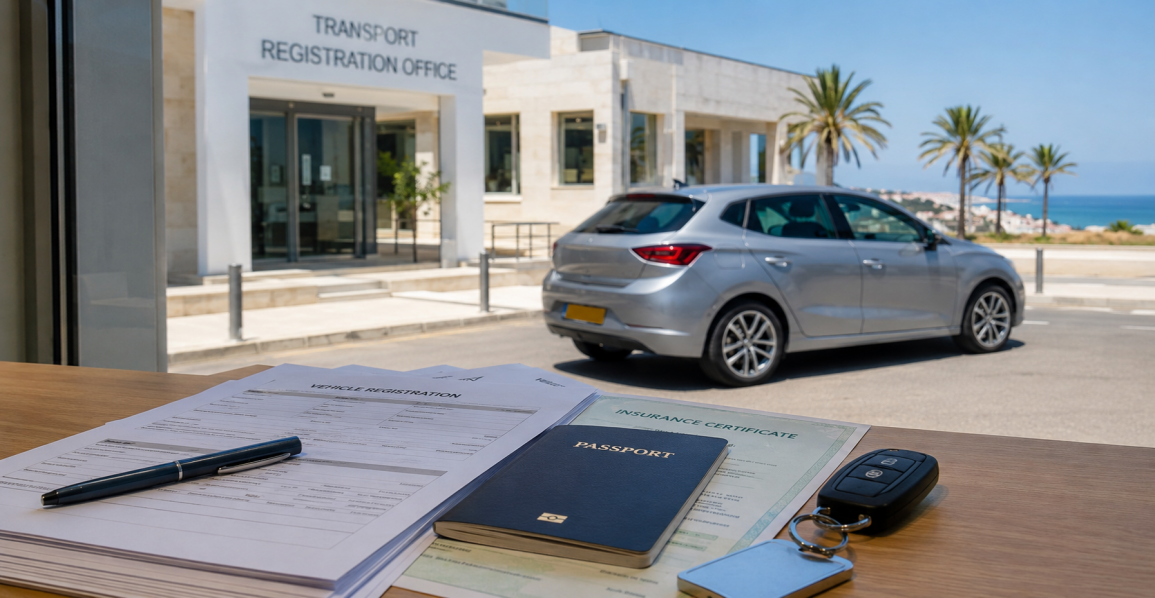
Driving a vehicle in Cyprus requires mandatory vehicle registration with the government authorities. Without it, you cannot legally and safely use the roads. Car registration Cyprus confirms ownership, allows you to obtain number plates, and serves as the basis for insurance. This guide will help you understand the process and avoid common mistakes such as late penalties or registration refusal.
Who can register a car in Cyprus
The following categories of people are eligible:
- Cyprus residents – citizens or permanent residents with a confirmed address
- EU citizens – with a residence permit or proof of temporary stay
- Non-EU citizens – must hold a valid Cyprus residence permit
- Expats and temporary residents – can register a car with a long-term residence permit
- Tourists cannot register a car in Cyprus. Short-term vehicle import is subject to separate customs regulations.
Which vehicles can be registered in Cyprus
New cars purchased from local dealers are the easiest to register, as they already meet all standards and dealers often assist with paperwork.
Used cars already registered in Cyprus are also common. In this case, the process is simply a transfer of ownership, which is much faster than importing a vehicle.
Cyprus has left-hand traffic, so right-hand-drive cars are registered without issues. Left-hand-drive vehicles are also allowed but must meet all safety requirements.
How to register a car in Cyprus – step-by-step

- Purchase and ownership documents – Sign a sales agreement with vehicle details (VIN, model, price).
- Customs clearance – Required for imported vehicles. Obtain clearance and pay duties.
- Technical inspection – The car must pass inspection and receive a Road Worthiness Certificate.
- Payment of fees and taxes – Includes registration fee, road tax, and stamp duty.
- Submission to the Department of Road Transport (DoRT) – Documents are reviewed by the local office.
- Issuance of documents and plates – You receive the logbook and Cyprus car registration number plates.
Documents required for vehicle registration

- Passport or EU ID card
- Cyprus residence permit (for non-EU citizens)
- Proof of address (utility bill or rental contract)
- Sales contract or dealer invoice
- Customs form 386 (for imported cars)
- Road Worthiness Certificate
- Proof of tax and fee payments
- Valid third-party insurance policy
Important: Before buying a used vehicle, always perform a Cyprus car registration check by reviewing the logbook and confirming there are no outstanding debts.
By following these steps and preparing documents carefully, vehicle registration can be completed smoothly and legally.
Car registration costs and vehicle taxes in Cyprus
The total cost depends on the vehicle type, age, and origin. Main expenses include:
- Registration fee – Approximately €85 for the initial certificate and plates.
- Road tax – Annual tax based on engine size (older cars) or CO₂ emissions (newer vehicles)
- Customs duty and VAT – Import only
- EU vehicles: VAT 19%
- Non-EU vehicles (e.g., UK): VAT 19% + customs duty up to 10%
- Environmental fee – One-time payment depending on emission class
When budgeting for a car in Cyprus, it is crucial to look beyond the showroom price. The final cost of legal ownership varies dramatically depending on whether the vehicle is new, used from the EU, or imported from a non-EU country. The following examples illustrate how taxes and fees are applied in common scenarios.
Cost examples:
- New car from a Cyprus dealer: VAT is included in the price. You pay only the registration fee (≈€85) and the first road tax.
- Used car from Germany: Add Cyprus VAT (19% if German VAT was removed), road tax, and registration fees.
Car imported from the UK (non-EU): Add customs duty (up to 10%), VAT 19%, an environmental fee, registration fee, and road tax. The total additional cost may increase the vehicle's price by 30–50%.
As these examples show, the origin of the vehicle is the primary cost driver. Importing a car, especially from outside the European Union, involves layered charges that can significantly impact your budget. A thorough calculation of all duties, taxes, and fees is an essential step before finalizing any purchase or shipment to avoid unexpected financial burdens.
Car registration Cyprus for imported vehicles

This process requires special attention and strict compliance with customs regulations.
EU vehicle registration specifics: The procedure is straightforward. You must provide the full set of original export documents and pay Cyprus VAT. Technical standards in the EU and Cyprus are aligned.
Non-EU vehicle registration specifics: This is a more complex and time-consuming process. In addition to high costs (customs duty + VAT), the car must pass strict compliance checks with Cypriot regulations. Expensive modifications are often required (headlights, emission standards).
Customs clearance stages
The process usually takes 2 to 6 weeks and includes:
- Submission of customs declaration and vehicle inspection
- Assessment of customs value and calculation of charges
- Payment of duties and VAT
- Issuance of the key document – Customs Document 386
Common difficulties: undervaluation of the declared price, non-compliance with standards, missing original documents.
Importing is often economically unreasonable for old, low-emission-inefficient, or inexpensive cars. The total of duties, taxes, and modification costs may exceed the price of a similar vehicle on the local market.
Vehicle insurance and its role in registration
Mandatory insurance is required by law. Without Third Party Liability insurance, vehicle registration at the Department of Road Transport is impossible.
Choosing an insurer: You may choose either a local Cyprus insurance company or an international provider with offices on the island.
Impact on registration: A valid policy is one of the core documents submitted to DoRT and is verified by inspectors. Insurance is also required for technical inspection.
Car registration timelines in Cyprus
Timeframes depend on vehicle type and document readiness.
Average processing periods:
- New car from dealer: 3–5 business days
- Used car already registered in Cyprus: 5–10 business days
- Imported vehicle: 2 weeks to 1.5 months
Delay factors: government office queues, document errors, required vehicle modifications, seasonal demand.
Fast-track registration: There is no official express service. Speed depends on proper documentation. Agents may help avoid mistakes and indirectly speed up the process.
If delays occur: stay in contact with inspectors or agents, do not drive the vehicle before receiving number plates and registration certificate, and keep all payment receipts and document copies.
Common car registration mistakes
Avoiding these errors saves time, money, and stress.
Ignoring environmental regulations. Since 2021, road tax and one-time fees depend on CO₂ emissions. High-emission or older vehicles may incur unexpectedly high annual costs.
Car registration Cyprus with professional assistance
Many car owners – especially expats and vehicle importers – choose to work with specialized agents or legal firms. In many cases, this approach is fully justified.
How professionals simplify the process:
- They know the current document requirements and inspector expectations at different DoRT offices
- They handle communication with customs, tax authorities, and the Department of Road Transport
- They correctly complete all forms in Greek or English
- They accompany the vehicle for technical inspection and anticipate possible issues
Who benefits most from professional help:
- People with limited Greek or English proficiency
- Those importing vehicles from outside the EU
- Busy individuals unable to visit government offices during working hours
- Anyone who wants a smooth, stress-free registration process
Frequently asked questions
- Can I drive the car before registration is completed?
No. Driving is only legal after receiving number plates and the registration certificate.
- Can I register a car without residency status?
No. A Cyprus residence permit or EU citizenship is required. Tourists cannot register vehicles.
- How do I transfer registration to a new owner?
The new owner must obtain insurance, pass technical inspection, and submit the standard document package along with the sales contract to the Department of Road Transport.
- What happens if I miss registration deadlines?
Conclusion
Car registration Cyprus is a structured but multi-stage process. Success depends on strict compliance with regulations, proper document preparation, and realistic budget planning. The most critical step is verifying the vehicle’s legal status and technical compliance – especially for imports.
If you want to save time and minimize risks, using professional registration agents is often the best solution. A well-managed registration process ensures full legality and peace of mind on Cyprus roads.

