



What to Do If Brakes Fail: A Step-by-Step Guide for Drivers
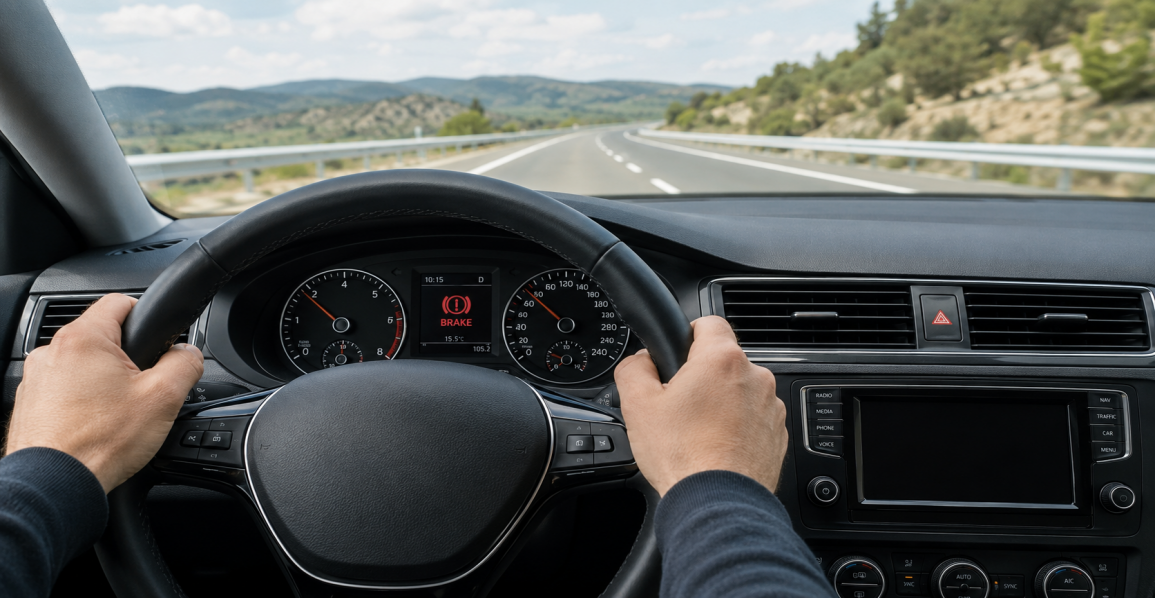
Brake failure is one of the most dangerous situations on the road. The driver has only a few seconds to assess the situation and respond correctly.
The main goal is to keep the car under control. You need to take your foot off the gas, assess the traffic situation, try to restore some braking force, use engine braking, and stop the vehicle safely. In this article, we explain what to do if brakes fail, how to recognize the first warning signs, and how to act to reduce the risk of a crash.
Why Brakes Can Fail

There are several possible causes of brake failure. One of the most common is a brake fluid leak. When the system loses pressure, the pedal becomes soft and braking force drops sharply.
Another common cause is brake overheating. This is especially dangerous on long downhill sections, during aggressive driving, or after a series of hard braking events. In that condition, the brakes may first become weaker and then almost stop slowing the car down.
Brake failure can also be caused by heavily worn pads, discs, hoses, or other system components. Problems with the hydraulic system, the brake booster, and poor maintenance also matter. If the fluid has not been changed for a long time, wear has been ignored, and unusual noises have gone unchecked, the risk becomes much higher.
The worse the condition of the brake system, the less time you have to react in a critical moment. That is why any sign of leakage, overheating, or unstable braking should be treated as a reason for immediate inspection.
How to Tell That the Brakes Are Starting to Fail

A complete failure rarely happens with no warning at all. In most cases, the first changes appear in pedal feel and in the way the car slows down.
Pay attention to pedal travel. If the pedal becomes soft or starts sinking farther than usual, that is already a warning sign. Check whether the stopping distance has increased. If the car slows down worse than before, the system needs to be checked immediately.
Do not ignore other symptoms either: grinding, squealing, vibration, jerking during braking, or the car pulling to one side. Another warning sign is a dashboard alert. If the brake system light or brake fluid warning light comes on, do not delay inspection.
Even one of these symptoms means the brakes are no longer working as they should. In that situation, it is safer to stop normal use and move straight to diagnostics instead of waiting for a total failure.
What to Do in the First Seconds

First, take your foot off the gas. Do not make sharp steering inputs and do not waste time on chaotic actions. Quickly assess what is happening ahead, to the sides, and behind you. Turn on the hazard lights at once to warn other drivers.
Keep the car moving in a straight line and move immediately to a clear sequence of actions: try to restore braking force, start slowing the car with the engine, and prepare to use the parking brake. In the first seconds, the key is not to panic and not to make sudden movements that could make the car unstable.
Try to Restore Braking
Pump the brake pedal several times quickly. If pressure in the system has not disappeared completely, repeated presses may partially restore braking force. Do not press the pedal once and hold it to the floor. Short repeated presses are more useful.
Watch how the car responds. If the pedal becomes firmer and the vehicle starts slowing down at least a little, use that remaining braking force together with other ways of reducing speed. If the pedal keeps sinking and there is no response, do not waste too much time on it. Move to the next step.
The key point here is simple: do not wait for the brakes to come back on their own. Pumping the pedal is only a quick attempt to restore pressure, not the main way to stop the car.
Use the Engine to Slow the Car
If the brakes fail, start slowing the car with the engine right away. In a manual transmission car, shift down step by step into lower gears. Do it gradually, without jumping several gears at once.
If you are wondering what to do if brakes fail in automatic car, shift into a lower gear range if the transmission design allows it. Depending on the vehicle, this may mean selecting a lower gear position or using a manual shift mode. Do it gradually and watch engine speed.
A sudden shift into too low a gear at high speed is dangerous. The car can lose stability and the engine can be overloaded. Reduce gears one step at a time and monitor how the vehicle behaves.
Engine braking will not stop the car instantly, but it can reduce speed significantly and give you more time to make a safe stop.
Use the Parking Brake

Use the parking brake only gradually. Do not yank it suddenly. If the rear wheels lock, the car can go into a skid, especially on a wet, slippery, or uneven road.
Apply the parking brake little by little and watch how the vehicle reacts. If you feel the rear of the car starting to lose stability, ease off slightly and continue slowing more carefully.
At high speed, the parking brake always requires extra caution. The faster the car is moving and the worse the road grip is, the higher the risk of a skid. That is why this method should be used only as a support measure, together with engine braking and the search for a safe place to stop.
If the vehicle has an electronic parking brake, check your owner’s manual in advance to understand how it works in an emergency. The logic can differ from one model to another.
How to Stop the Vehicle Safely

If the brakes stop working, look for a place where you can reduce speed without creating more danger for others. First look for an open lane, a wide shoulder, an area without dense traffic, or any space where the car can leave the main flow.
Use anything that helps slow the car safely. If there is an uphill section ahead, steer toward it. If there is gravel, loose surface material, or a road edge with more resistance, that can also help reduce speed. In the worst case, controlled friction against a curb or another object at an angle may be acceptable if it lowers the risk of a more serious impact.
The main point is not to preserve a perfect line at all costs if there is dense traffic or an obstacle ahead. In that situation, it is more important to move the car toward the place where the consequences will be smallest.
What to Do on Different Types of Roads
The basic algorithm stays the same, but the road environment changes your priorities.
In the city
- turn on the hazard lights immediately;
- watch for pedestrians, intersections, and stopped vehicles;
- look for an open shoulder, pull-off area, or empty section of road.
On the highway
- leave the main traffic flow as early as possible;
- use a wide shoulder;
- if possible, direct the car toward an area where the risk of hitting other vehicles is lower.
On a downhill section
- shift into lower gears as early as possible;
- do not let the car keep gaining speed;
- look for an uphill section, emergency escape ramp, or an area with higher rolling resistance.
In bad weather
- act more gently than usual;
- do not yank the parking brake;
- remember that wet, snowy, or icy roads sharply reduce grip.
The worse the grip and the denser the traffic, the more important it is to avoid sudden movements. On a slippery road, a steering mistake can become more dangerous than the loss of braking itself.
What You Must Not Do
When brake failure happens, you cannot afford to lose control because of panic or sudden actions. A mistake in that situation often makes the outcome worse than the failure itself.
Do not do the following:
- do not pull the parking brake sharply;
- do not switch off the engine at high speed;
- do not shift into neutral too early;
- do not make sharp lane changes or steering inputs unless absolutely necessary;
- do not let go of the steering wheel or stop controlling the car’s path.
Another important point: do not waste time on random actions. If the pedal is not working, move straight to a clear algorithm instead of trying one accidental solution after another.
What to Do After the Car Stops
Once the car has come to a complete stop, make sure the hazard lights are on. Set out a warning triangle and do not continue driving under your own power. Even if the vehicle stopped without a collision, that does not mean the problem is gone.
Act in order:
- make sure the vehicle is standing in a safe place;
- warn other road users;
- call a tow truck or roadside assistance;
- do not try to drive to a repair shop yourself.
If the cause of the failure is not obvious, do not test the brakes by driving again. After a situation like this, the car needs a professional inspection.
How to Prevent Brake Failure
You cannot eliminate the risk completely, but you can reduce it sharply. That requires regular brake system checks, not just reacting when the symptoms become obvious.
Monitor the condition of the brake fluid, pads, discs, hoses, and overall pedal behavior. Do not ignore unusual noises, a longer stopping distance, or warning lights on the dashboard. If the car has started braking differently, that alone is enough reason for inspection.
Be especially attentive after long downhill stretches, aggressive driving, or any extreme brake load. Overheating does not always cause an immediate failure, but it often accelerates wear and reveals weak points in the system.
When You Need Service Urgently
Go to a repair shop immediately if you notice signs that the brake system is working worse than normal. This is not something to postpone.
You need urgent inspection if:
- the pedal has become soft or sinks down;
- the stopping distance has increased;
- there is a fluid leak;
- the brake warning light is on;
- vibrations, pulling to one side, or unstable deceleration have appeared;
- the brakes overheated after a heavy load.
Even one of these signs is enough reason for diagnostics. It is always better to inspect the brake system early than to deal with a full brake fail event while driving.
Conclusion
Brake failure is a critical situation, but even then a lot depends on the driver’s actions. If you take your foot off the gas quickly, keep the car under control, try to restore some braking force, use engine braking, and slow the vehicle carefully, the risk of severe consequences becomes lower.
The main safety factors are simple: stay calm, follow a clear sequence, and keep the brake system in proper condition. If the brakes fail once or start working worse than before, do not delay inspection. When you understand what to do if brakes fail, you gain time in an emergency. Regular maintenance helps prevent that situation from happening in the first place.

