



How to Unlock a Steering Wheel: Causes, Quick Fixes, and Driver Tips
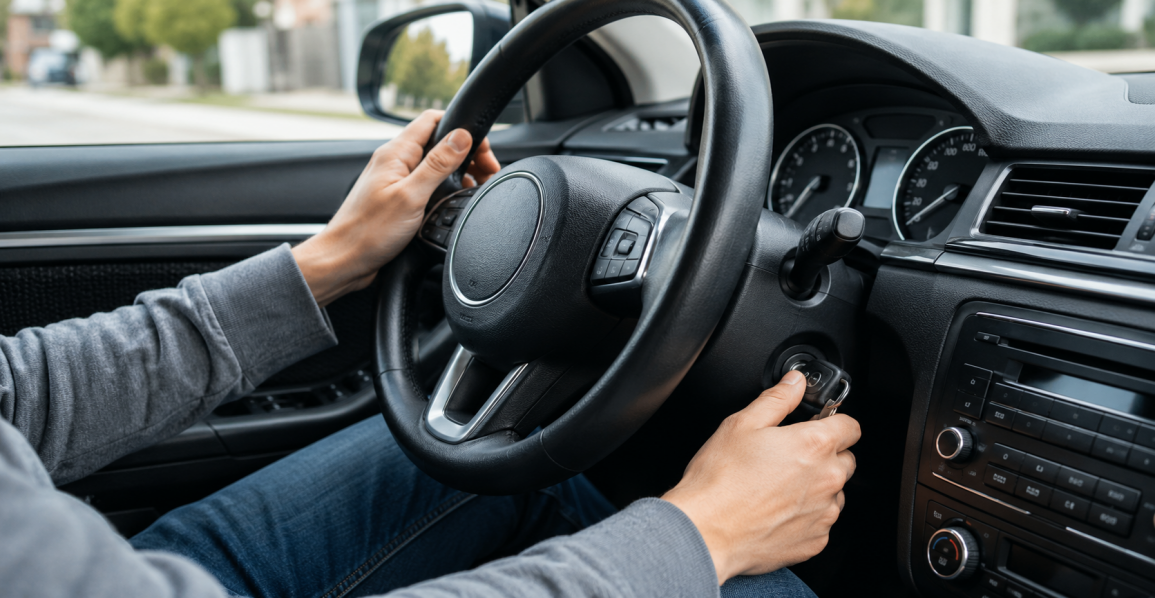
Imagine this: you get into your car, slide the key into the ignition, but it won’t budge. You try to turn the steering wheel, and it’s completely seized. For many drivers, the first reaction is panic or the sinking feeling that the steering system has suffered a major mechanical failure.
In reality, 95% of the time, this isn't a breakdown—it’s a standard safety feature. However, not knowing how to unlock the steering wheel can lead to real damage if you try to force it.
Here is why this happens and how you can resolve the issue in a matter of seconds.
Why is my steering wheel locked?

Car manufacturers have designed several scenarios where the steering column will lock automatically. Understanding the "why" helps take the stress out of the situation.
The primary reasons include:
- Mechanical Anti-Theft System: This is the most common cause. If the steering wheel is turned even slightly after the engine is off and the key is removed, a spring-loaded deadbolt snaps into place. It’s a security feature designed to prevent a thief from steering the car even if they manage to hotwire it.
- Residual Pressure or Tension: If you park with your wheels turned sharply (for example, when parking on a hill), the steering rack remains under tension. This pressure pins the locking bolt so tightly that the ignition cylinder can't move to release it.
- Component Wear: Over time, the internal tumblers of the ignition cylinder or the teeth of the key itself can wear down. When this happens, the lock fails to "recognize" the key, preventing it from turning.
- Electronic Glitches (ESL/ELV): In modern vehicles equipped with a Push-to-Start button, the lock is operated by an electronic actuator. This can occasionally hang up or fail to retract if the battery voltage is low.
These reasons cover nearly every instance of a locked wheel—ranging from standard safety triggers to rare technical hiccups that might require a mechanic's touch.
How the steering column lock works
To fix the problem effectively, it helps to understand the physics at play. Depending on the age and model of your vehicle, engineers use one of two main systems:
A mechanical lock consists of a steel pin (or "tongue") that slots into a groove on the steering shaft. When you pull the key out, this pin is pressed against the shaft. The moment the wheel is turned slightly, the pin falls into the groove and holds the column steady.
An electronic lock (ESL) operates differently. When the ignition is turned off, the car’s computer sends a signal to a servo motor, which extends the locking element. The system will only unlock once the car detects the correct electronic transponder (chip) inside your key fob.
How to diagnose the cause
Before you take action, it’s important to identify exactly what you’re dealing with. This ensures you don't waste effort or make things worse if the issue is electronic or related to your gear shifter. Look for these specific signs:
- Standard Mechanical Lock: The wheel is seized and the key won't turn. This is usually the basic "bind" between the deadbolt and the ignition.
- Key Issues: If the key doesn't go in all the way, or feels like it's "catching" inside the cylinder regardless of how you move the wheel, the problem is likely the key or the cylinder itself.
- Electronic Error: If you see a steering wheel icon on your dashboard—often yellow or red—or a message like "Steering Lock Malfunction," you’re likely facing an electronic glitch rather than a mechanical jam.
- Gear Shifter Position: In many automatic vehicles, the ignition will not turn unless the shifter is fully engaged in P (Park). Sometimes the lever looks right but hasn't clicked into place, preventing the system from releasing the lock.
Identifying the problem through these points allows you to apply the right fix without risking damage to the mechanism.
How to unlock your steering wheel: A step-by-step guide
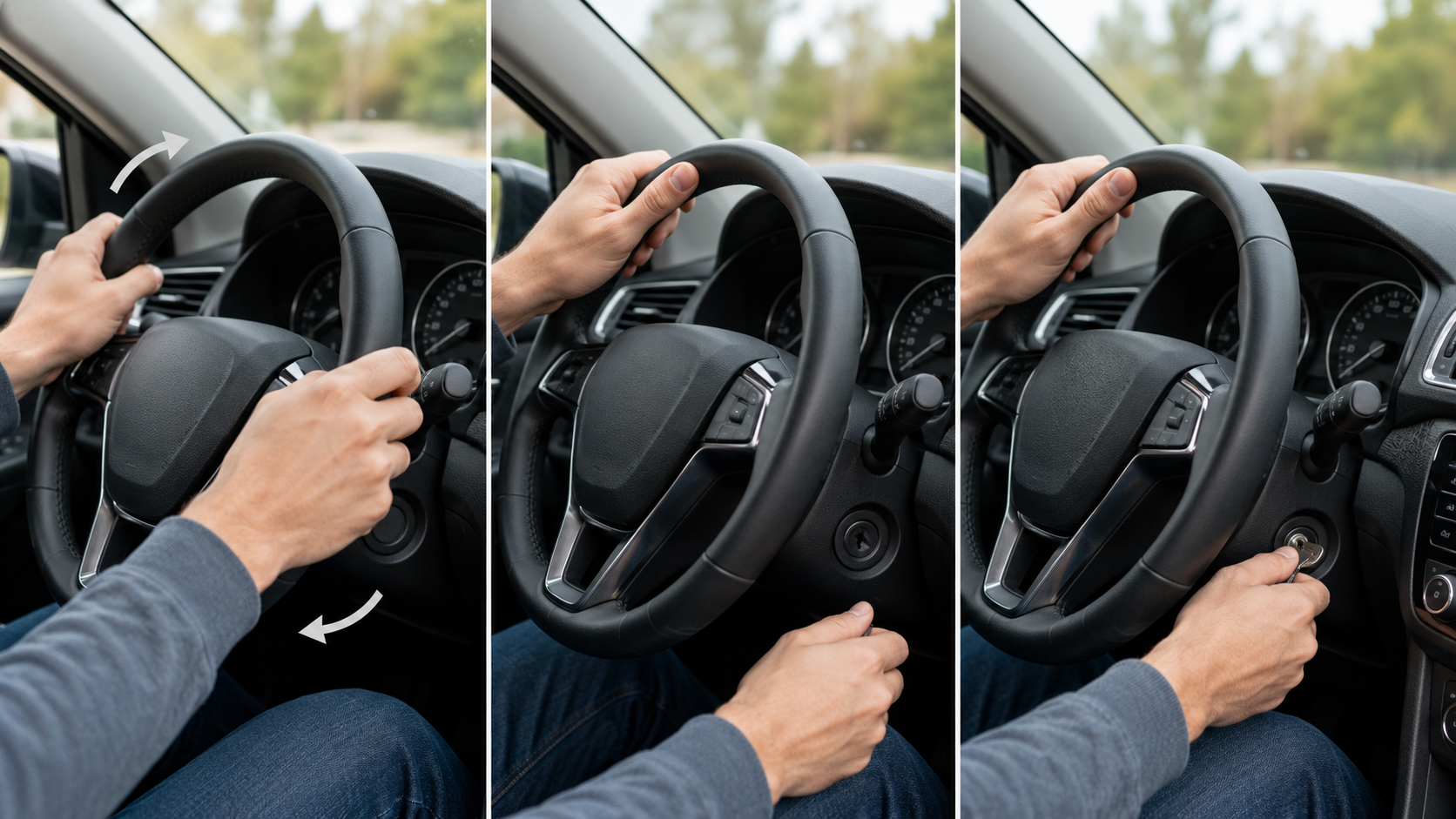
If your steering wheel is locked, you need to be methodical. The golden rule is: never use brute force. Follow these steps:
- Find the "Give": Try to jiggle the wheel left and right. You will notice that it won't move at all in one direction, but there is a tiny bit of "give" (a few millimeters) in the other.
- Apply Tension: Pull the wheel firmly in the direction where it has that bit of play and hold it there. This relieves the pressure the steel pin is putting on the ignition lock.
- The Sync Move: While holding that tension on the wheel, gently try to turn the key. If it doesn't turn immediately, lightly rock the wheel back and forth while maintaining steady, gentle pressure on the key.
If you try to force the key without relieving the tension on the wheel, you risk snapping the key off inside the ignition. Proper coordination usually solves the problem in about two seconds.
What to do if the key still won't turn
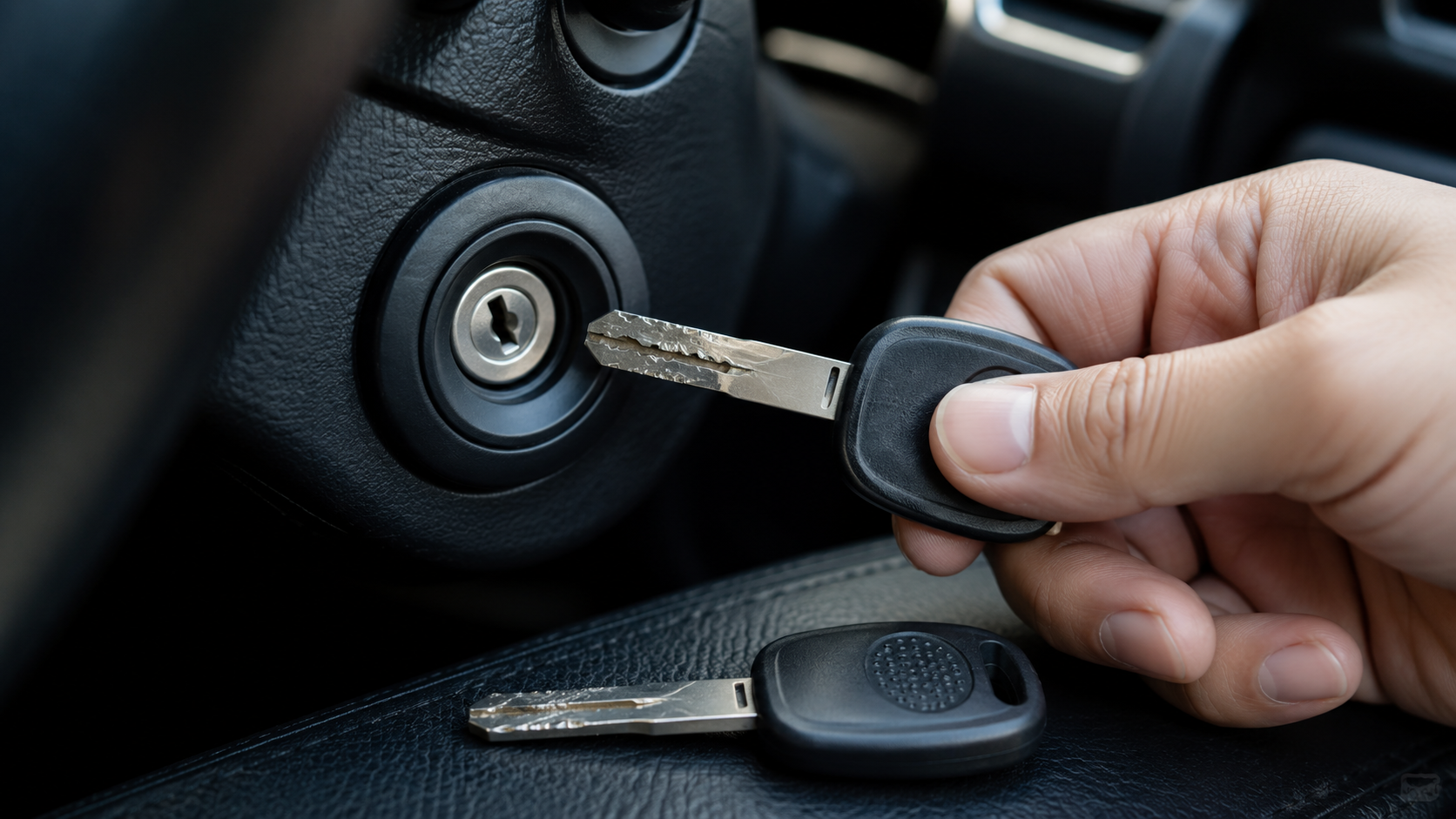
Sometimes, the standard "jiggle" isn't enough. If the lock remains stubborn, the issue might be wear or debris inside the mechanism:
- Try the Spare Key: Keys wear down over years of use. Try your spare key, which likely has its original, sharp edges.
- Clean the Lock: Dust and lint can get trapped inside the cylinder, blocking the tumblers. Use a specialized lock lubricant. After a quick spray, slide the key in and out several times without turning it to distribute the lubricant.
- The Tapping Method: On older vehicles, a light tap on the head of the key with the handle of a screwdriver while it's in the ignition can sometimes vibrate stuck tumblers back into place.
If the lock remains immobile after these attempts, there is a high probability of an internal mechanical failure within the ignition cylinder.
Push-to-Start vehicles: Key nuances
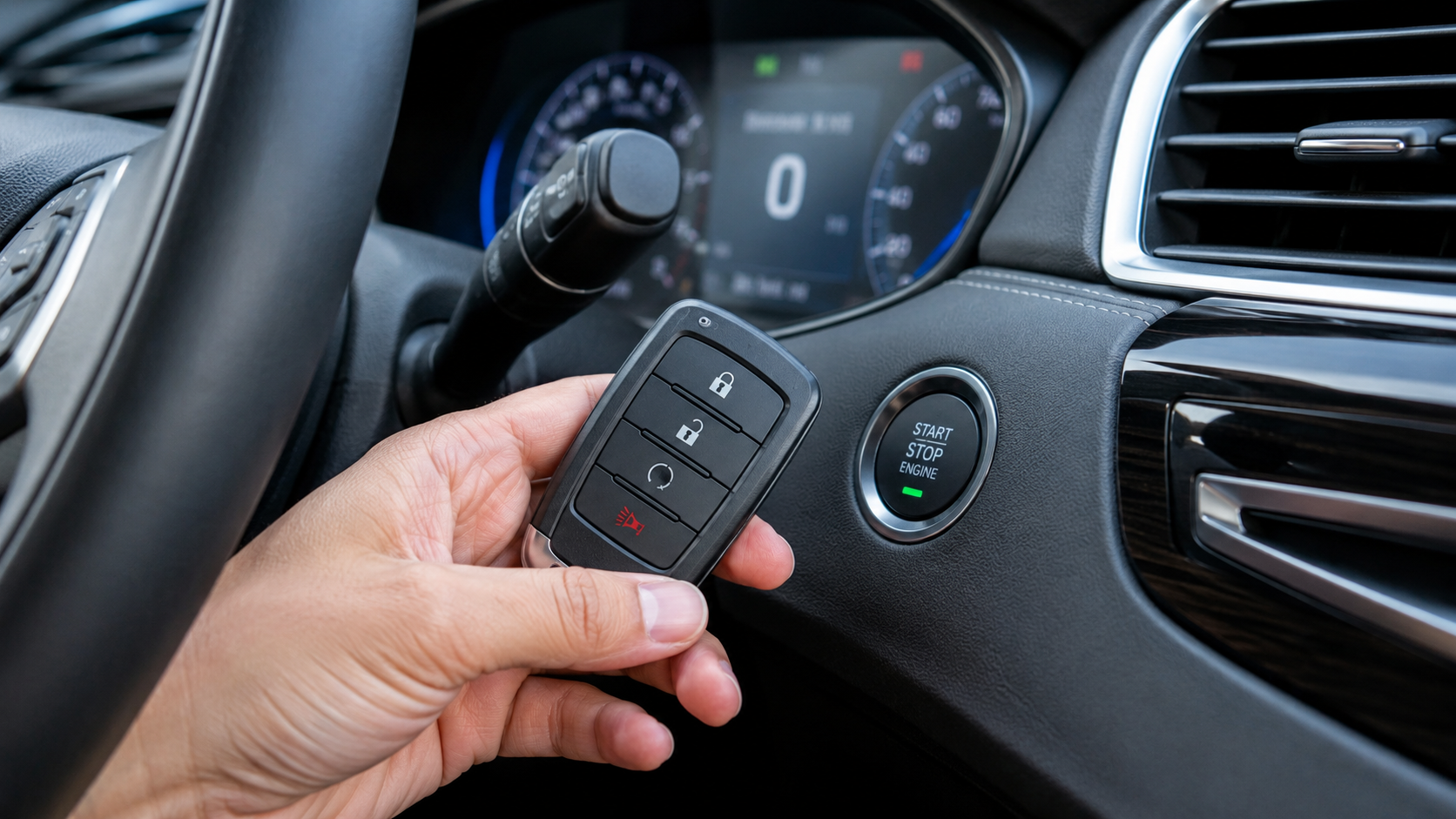
In cars without a physical ignition key, the question of "why is my steering wheel locked" is usually an electronic one. Check these specific areas:
- Battery Voltage: If your car battery is dead or weak, the electronic lock (ESL) won't have the power to retract. Check your lights or try to jump-start the car.
- Key Fob Placement: Ensure the car can "see" your fob. If the fob battery is dead, hold the fob directly against the Start button or the specific mark on the steering column (check your manual for the exact "emergency" spot).
- Power Cycle: Step out of the car, lock it, wait a minute, then unlock it and try again. A simple reset of the car’s modules often clears temporary glitches.
Can you unlock a steering wheel without a key?
Drivers often wonder if there is a "hack" to bypass this. The answer is simple: legally and safely—no.
The lock is specifically engineered to be impossible to disengage without the key. Any attempt to force it will likely bend the steering shaft or destroy the ignition housing. In the end, the repair bill will be ten times higher than simply calling a professional locksmith.
Signs of a serious failure
Sometimes you have to admit that a simple fix isn't going to cut it. You should stop your attempts and call for service if you notice:
- The key turns, but the steering wheel remains locked (broken internal linkage).
- Metal shavings or "dust" fall out of the ignition cylinder.
- You hear a distinct grinding or crunching sound when trying to turn the key.
- A "critical steering error" message appears on the dash, preventing the car from starting.
Calling a pro early can save the integrity of your steering column and other expensive components.
How to avoid a locked steering wheel in the future
To make sure you aren't caught off guard again, try to build a few simple habits. Experts recommend the following:
- Park with Straight Wheels: Avoid parking with the wheels cranked to the extreme left or right, especially on uneven ground.
- Don't Use the Wheel as a Handle: Don't grab the steering wheel to pull yourself out of the car after you've pulled the key. This is the movement that almost always triggers the lock.
- Lighten Your Keychain: A heavy set of keys creates leverage that wears out the internal tumblers of your ignition lock over time.
- Preventative Maintenance: If you notice your key is starting to stick or requires a "trick" to turn—don't wait for it to lock up completely. Have a locksmith or mechanic look at it immediately.
Conclusion
A locked steering wheel isn't a breakdown; it’s a sign that your car’s safety systems are doing their job. In most cases, it only takes a gentle pull on the wheel and a smooth turn of the key to get moving.
Remember: cars respond best to finesse, not force. When your steering wheel is locked, the key isn't a lever—it's a precision tool. By knowing the "tension and turn" technique, you’ll always be able to get back on the road without unnecessary stress or repair costs.

