



What You Need to Know About an Imported Car
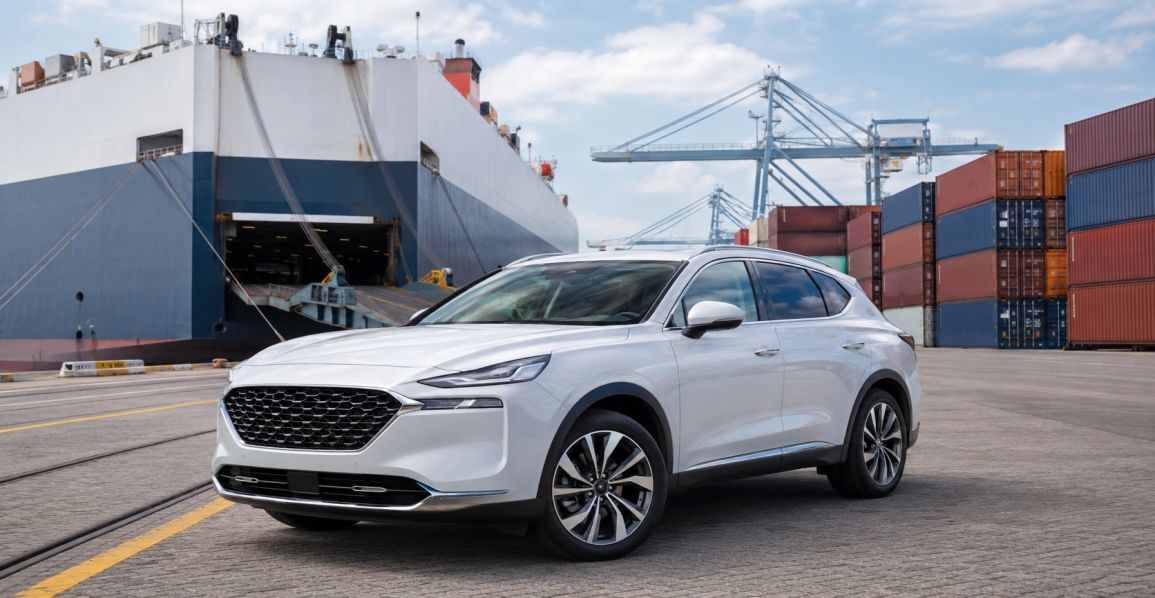
The global automotive landscape is undergoing a monumental shift as we move through 2026. A decade ago, sourcing a vehicle from overseas was seen as a niche venture reserved for die-hard enthusiasts or those living near major port cities. Today, however, an imported car represents a calculated, sophisticated choice for the pragmatic buyer who values superior build quality and financial efficiency. In an era where local dealership networks often grapple with inventory shortages, restricted model ranges, or inflated "market adjustment" markups, the ability to tap into the global vehicle supply chain is a competitive advantage. Importing is far more than a simple cost-saving exercise; it is a gateway to unique specifications, meticulously documented service histories, and a level of mechanical preservation that often puts domestic secondary market offerings to shame.
This comprehensive guide will dissect the inner workings of the international auto trade, explain why professional vetting through DriveClick has become the industry benchmark for safety, and highlight exactly what you need to look for to ensure your automotive investment yields long-term satisfaction rather than unexpected repair bills.
Defining the Imported Car: A Deep Dive into Terminology
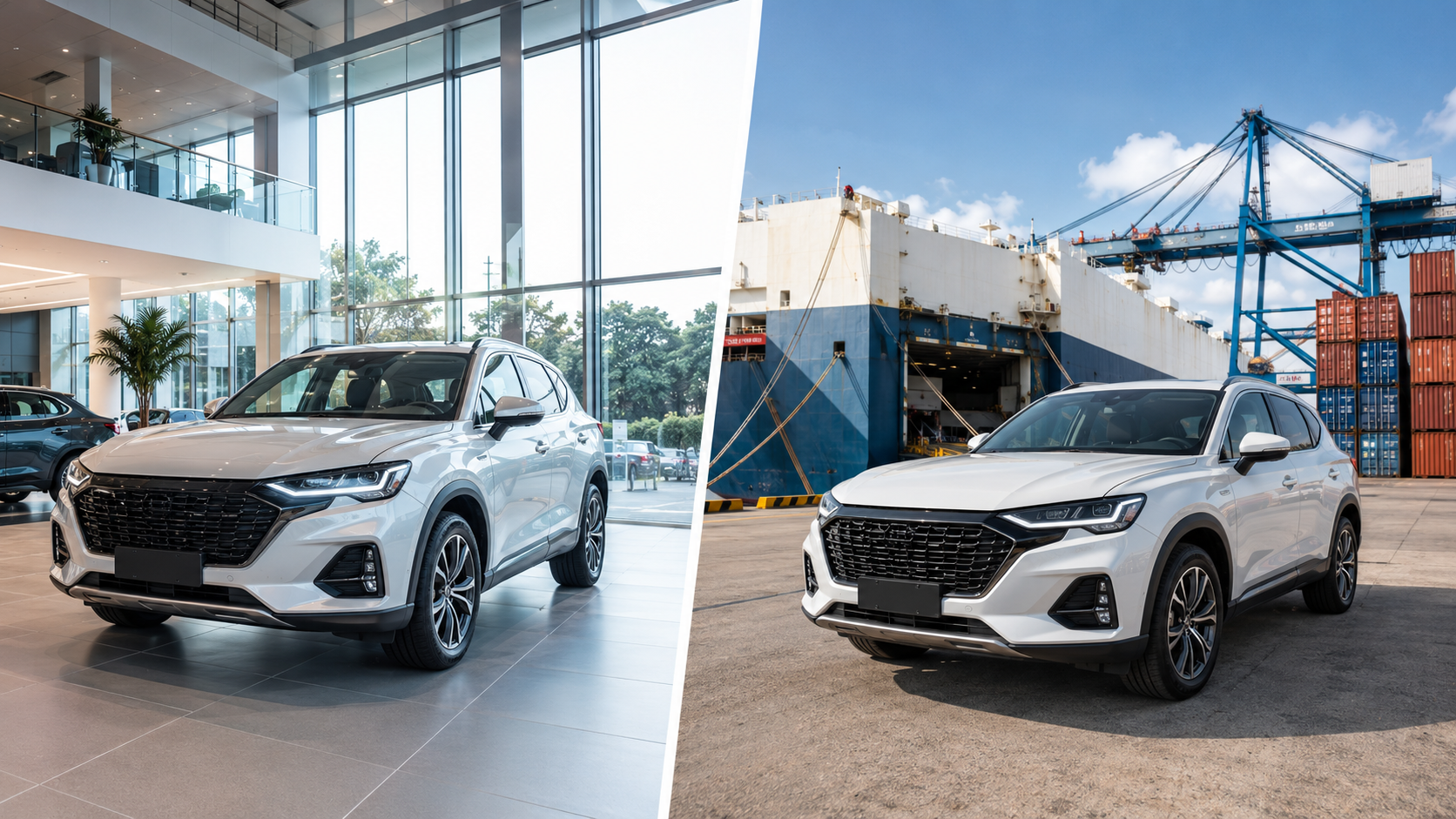
Before we get into the logistics, we must establish a clear vocabulary. In the broadest sense, any vehicle manufactured outside your country of residence is an import. However, in professional circles, we draw a sharp line between "Official Imports" and "Individual" or "Parallel Imports." Official imports are vehicles brought in by a brand’s national headquarters (e.g., Toyota USA or BMW UK) to be sold through authorized dealer networks. While these cars are "localized" with specific suspension tuning or infotainment languages, they are often subjected to "de-speccing" to keep local price points competitive.
Individual or parallel importing, on the other hand, involves sourcing a specific unit—often one built for the manufacturer's home market—and bringing it in via independent channels. This allows a buyer to access the high-tier engineering standards of domestic Germany, the cutting-edge tech of South Korea, or the legendary reliability of Japanese-market exclusives. These vehicles are often built with higher-grade materials and more robust components because they were designed for the most demanding consumers in the world: the manufacturer's own citizens.
Global Geography: Primary Sources of High-Quality Vehicles
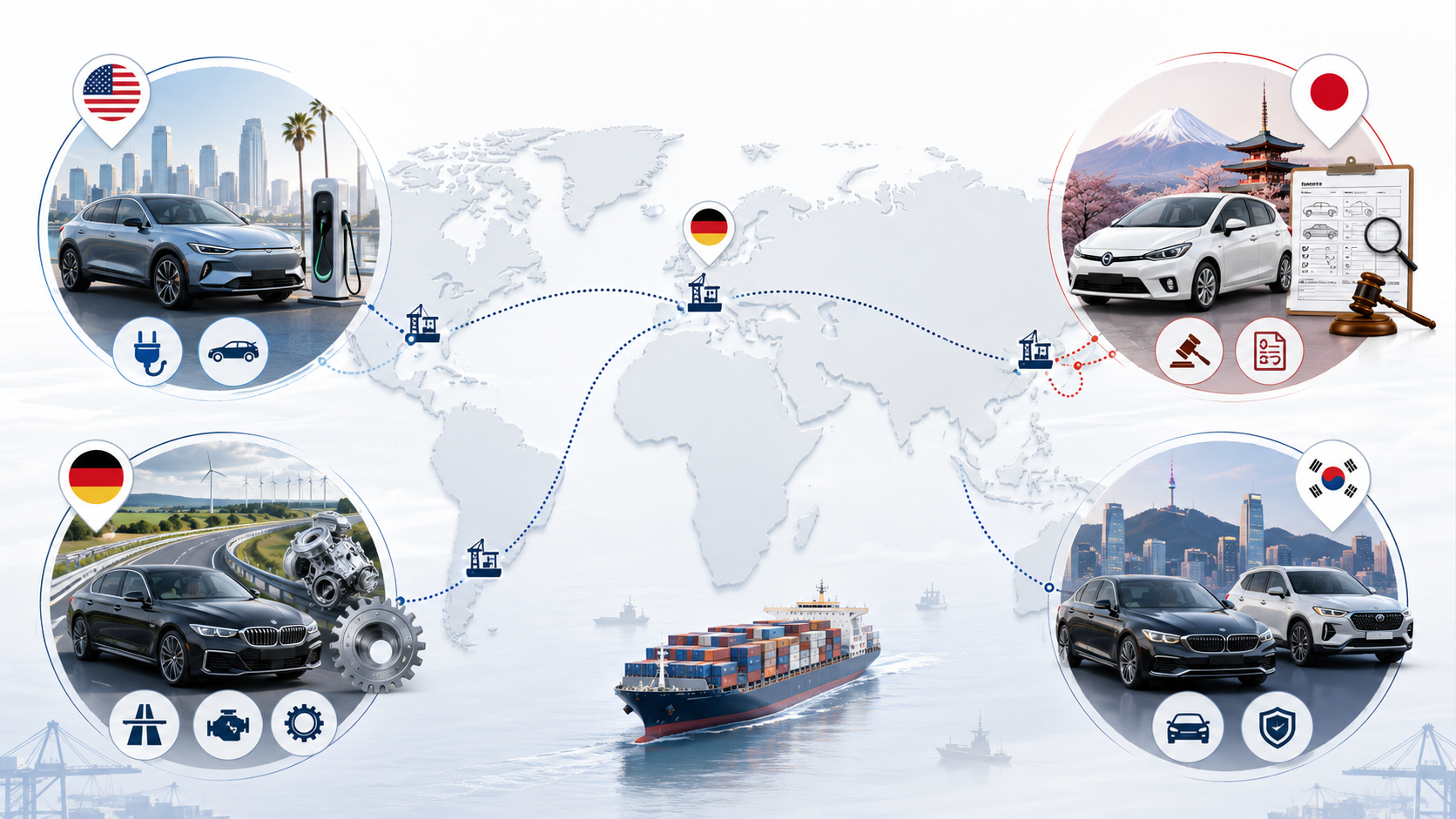
When we look at the world map of automotive excellence, four regions dominate the export market:
- Japan: The undisputed global leader in transparency, powered by a rigorous and honest auction system.
- South Korea: A rising powerhouse for 2026, offering incredible value in the diesel SUV and luxury sedan segments (think Genesis and high-spec Hyundai/Kia).
- Germany: The go-to source for precision-engineered diesels and executive cars that have spent their lives on perfectly maintained autobahns.
- The USA: An massive playground for high-displacement gasoline SUVs, trucks, and Tesla EVs, often available at significant discounts due to the sheer volume of the American market.
The Economics of Global Sourcing: Why Buyers Go International
The primary driver behind the surge in global sourcing is the sheer scale of choice. Any domestic market is naturally limited by what local owners happen to be selling at that moment. By expanding your search globally, you are choosing from millions of units rather than hundreds. If you are hunting for a specific interior hide, a rare carbon-fiber trim package, or a particular plug-in hybrid drivetrain that was never officially released in your region, the probability of finding it on the global stage is nearly 100 times higher.
Furthermore, the process to import cars from japan has been refined into a science over the last few decades, offering a level of certainty that local private sales simply cannot match. The Japanese market is unique because "mileage tampering" or hiding accident history is virtually non-existent at the auction level; doing so would result in the immediate revocation of an auction house's license. Every vehicle undergoes a "Condition Grade" inspection by a neutral third party, resulting in a detailed report (the Auction Sheet) that notes every microscopic scratch or mechanical imperfection. For the buyer, this translates to a "zero-risk" purchase where the car's condition is mathematically verified before a single dollar is spent.
Professional Procurement: The DriveClick Advantage

Navigating international waters requires more than just a laptop and a dream. By partnering with a tier-one supplier like DriveClick, you remove the friction of language barriers, the complexity of SWIFT/international payments, and the logistical nightmare of port delays. A professional partner handles the end-to-end chain, from verifying the auction sheet to the final issuance of your local title and registration.
Feature Comparison | Local Secondary Market | DriveClick Global Import (JP/KR/GER) |
Mileage Verification | Often suspicious; requires manual inspection | Guaranteed by official export certificates |
Mechanical Health | Varies by local road quality and fuel grade | Exceptional (High-grade fuel, smooth highways) |
Optional Equipment | Restricted to local dealer stock | Unlimited access to global flagship specs |
Legal/Title Security | Risk of hidden liens or salvage history | 100% white-market customs clearance |
Price Transparency | Includes multiple middleman markups | Transparent: Hammer price + Tax + Fee |
An Objective Look at Pros and Cons
As a veteran of this industry, I refuse to present a one-sided narrative. To make an informed decision, you must weigh the benefits against the inherent logistical realities.
The Advantages
- Mechanical Longevity: A vehicle that has covered 100,000 km on the German Autobahn is technically "younger" than a city car that has idled for 50,000 km in stop-and-go traffic on potholed local streets.
- Value Retention: Importing a three-year-old premium SUV from Korea or Japan often costs the same as buying a brand-new, basic-spec economy sedan locally. Three years later, the premium SUV will likely hold 60% of its value, while the economy car will have plummeted.
- Innovation Access: Many of the most advanced solid-state battery EVs and hydrogen-hybrid systems for 2026 are released in East Asia long before they reach Western showrooms.
The Disadvantages
- The Wait Time: Global logistics is a slow-moving beast. Between purchase, sea freight, and customs, you are looking at a 20-to-60-day window. This is not for those who need a car by Friday.
- Warranty Gaps: While you can always pay for service, manufacturer warranties are often regional. However, DriveClick offers specialized third-party warranties to bridge this gap.
- Calculation Complexity: Without expert help, calculating the precise customs duty (which fluctuates based on engine displacement, age, and CO2 emissions) can lead to expensive "sticker shock" at the port.
A common point of contention in automotive forums is the question: are imported cars bad because they aren't "winterized" or "built for local fuel"? This is a lingering myth from the 1990s that has no place in 2026. Modern vehicles are built on global platforms designed to operate in everything from the humidity of Southeast Asia to the sub-zero winters of Hokkaido. The only genuine concern involves vehicles sourced from extreme heat zones (like Dubai), which may lack high-output heaters or underbody anti-corrosion coating. However, professional firms like DriveClick specifically exclude these regions when sourcing for northern climates, ensuring every vehicle is perfectly suited for its new home.
How to Import Through DriveClick: The Step-by-Step Blueprint
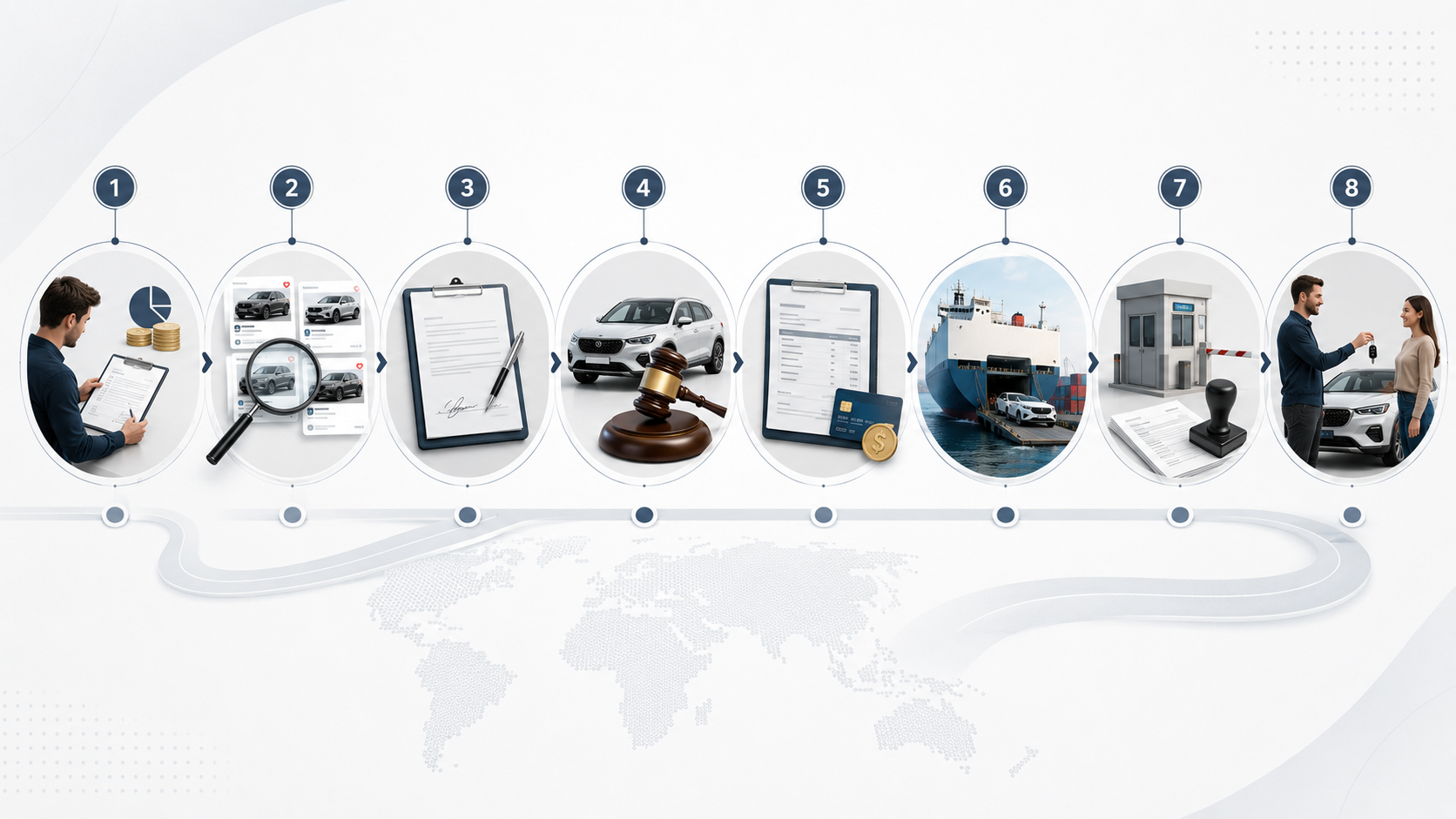
To ensure a seamless transition from a foreign port to your driveway, we follow a rigorous, eight-step algorithm.
- Consultation & Budgeting: We define your parameters: Make, model, year, and a "landed" budget that includes every cent of taxes and fees.
- The Global Search: Our managers scan Japanese auctions, Korean dealer-only platforms, and German trade databases, sending you options with full translations of all technical remarks.
- Contractual Security: We formalize the agreement. Having a legal anchor in your home country is your primary safety net.
- The Bidding Phase: Once you approve a unit, our broker places the bid. You pay the actual hammer price—never a penny more.
- Invoicing & Payment: You settle the vehicle cost directly with the exporting country. This ensures complete financial transparency. For 2026, we utilize secure, high-speed international payment rails to lock in exchange rates and minimize bank fees.
- Logistics & Freight: The vehicle is moved to a port, loaded onto a specialized Ro-Ro (Roll-on/Roll-off) vessel or a secure container, and tracked in real-time.
- Customs Clearance: The DriveClick team prepares the "Safety Certificate" (SBKTS), Electronic Title (EPTS), and handles the payment of all environmental and utilization levies.
- Final Handover: You receive a detailed, professionally valeted vehicle with a full set of documents ready for immediate local registration.
Debunking Common Import Myths
Let’s dismantle the three biggest lies currently circulating in the auto market.
Myth 1: Right-Hand Drive (RHD) is dangerous in LHD countries.
Statistics show that RHD owners tend to be more attentive drivers. Furthermore, 2026-era ADAS (Advanced Driver Assistance Systems) like 360-degree cameras and blind-spot monitoring have made the "overtaking" argument obsolete. People choose RHD Japanese imports specifically because the build quality of JDM (Japanese Domestic Market) units is vastly superior to export-grade cars.
Myth 2: Customs duties cost more than the car itself.
This is only true for "old" cars (over 7 years) with massive, inefficient engines. For the "sweet spot" age range of 3 to 5 years with modern 1.0L to 2.0L engines, duties are remarkably reasonable, often leaving the total price significantly below the local market average.
Myth 3: You can’t verify the history.
In reality, it is often easier to verify an import. Between the US's Carfax, Japan's Auction Statistics, and Europe's digital service logs, there is a "paper trail" that is much harder to forge than a local service book that has changed hands four times in five years.
The Professional Procurement Guide: What to Verify
If you are a "do-it-yourself" enthusiast or simply want to audit your supplier, use this checklist to ensure you are buying an imported car the right way.
1. The Paperwork Audit
Never wire funds without seeing a copy of the Export Certificate and a pro-forma Invoice. The VIN (Vehicle Identification Number) or Frame Number must be clearly legible and consistent across all documents.
2. Auction Sheet Forensics (Specific to Japan)
Don't just look at the 4.5 or 5.0 grade. Look at the "Inspector's Remarks." Look for the letters:
- A: Scratches
- U: Dents
- W: Repaint/Bodywork
The number next to the letter (1, 2, or 3) indicates severity. A "W1" is a professional touch-up; a "W3" is a major repair.
3. Real-Time Duty Calculations
Customs regulations for 2026 are dynamic. Always use an official portal or a broker’s calculator to account for the most recent changes in "Utilization Fees" or "Green Taxes."
Recommended Online Services for Monitoring and Payment:
- TKS.ru – The most accurate calculator for regional customs duties.
- Aleado – Access to Japanese auction archives to verify a car's original condition.
- Wise / Revolut – Essential for 2026 cross-border payments with minimal spread.
- Check-Vins – The gold standard for verifying history in the Korean and European markets.
Table: The Optimal "Age Bracket" for Importing
Vehicle Age | Customs Status | The Verdict |
0 - 3 Years | "New" | High duties; only viable for ultra-luxury or exotic models. |
3 - 5 Years | "Prime Window" | The Sweet Spot. Lowest duties and maximum remaining vehicle life. |
5 - 7 Years | "Pre-Old" | Duties rise, but still viable for specialized machinery or rare diesels. |
7+ Years | "Aged" | Prohibitive taxes make this economically unfeasible for most. |
Conclusion: Is the Effort Justified?
As we conclude this deep dive, we must acknowledge that the import market is a land of immense opportunity for those who refuse to be confined by the walls of a local dealership. When you understand the true value of a global vehicle, you transition from being a mere consumer to an informed investor. Importing allows you to secure a machine that will serve you faithfully for years while maintaining a high resale value due to its superior provenance.
The primary risks of the trade are always rooted in a lack of information or the temptation to cut corners by avoiding professional intermediaries. However, the reward for doing it right is a vehicle that exceeds your expectations in every category. Partnering with a specialist like DriveClick removes the burden of logistics, technical vetting, and border bureaucracy. It is, quite simply, an investment in your safety, your status, and your wallet.
Ultimately, the world of automobiles is vast—don’t limit yourself to what happens to be sitting on the lot down the street. Your ideal vehicle might be waiting in the Port of Yokohama or a climate-controlled facility in Seoul, and in 2026, it is closer to your driveway than ever before.

Appendix: Technical Maintenance for Imports (Expert Tips)
For those who have read this far, here are a few "20-year veteran" tips for the day your car arrives. Always perform a "Zero-Maintenance" service. Regardless of what the auction sheet says, change every fluid: engine oil, transmission fluid (especially for CVTs), and coolant. This resets the maintenance clock and gives you a baseline for ownership.
Additionally, pay attention to the infotainment system. Most 2026 systems can be localized to English or your native language via a simple software flash or an SD card update. Importing isn't a hurdle; it's a modern standard. I hope this guide has provided the clarity you need to move forward with your purchase.

