



Gasoline or Electric Car: Which to Choose in 2025?
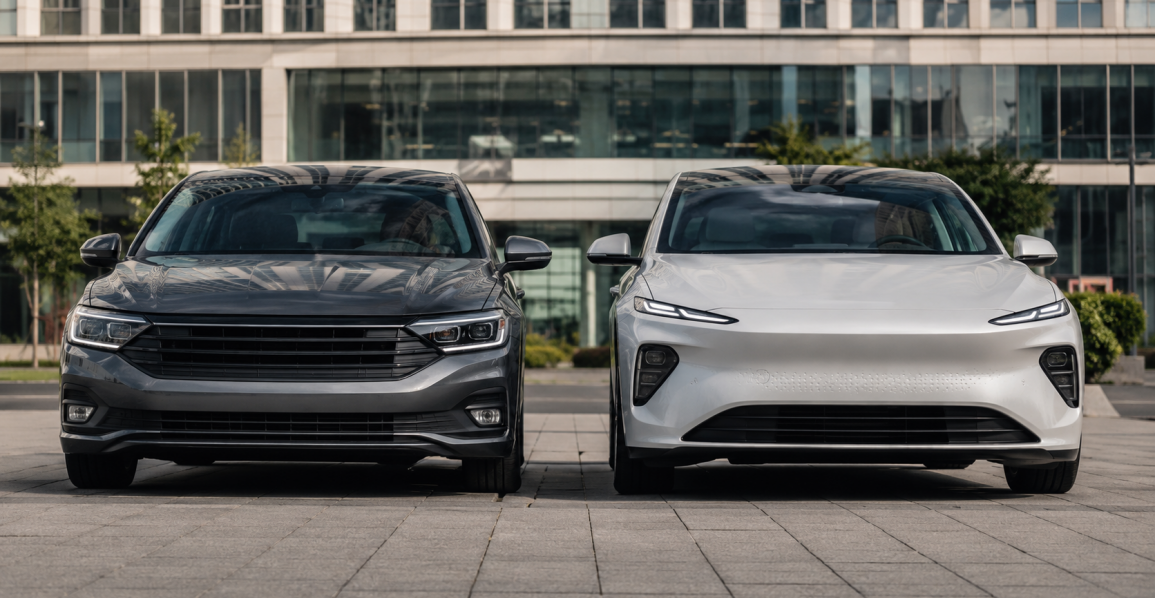
Choosing a new car today is more than just deciding on a make and model; it’s a choice between two distinct technologies: the time-tested internal combustion engine (ICE) and the innovative electric drivetrain. Gasoline price increases show no signs of stopping. According to Rosstat data, the annual increase in the cost of various gasoline brands in 2024–2025 ranged from 9.6% to 26.4%, forcing drivers to seek economic alternatives. Simultaneously, EV technology is improving—new models offer extended range, faster charging, and a decrease in battery costs is making electric vehicles (EVs) more accessible. Legislation in many countries (including Russia) is actively stimulating the transition to "green" transport through subsidies, benefits, and infrastructure development programs. This article provides a comprehensive gas vs electric cars comparison to help the reader make a decision. We will analyze the cost (initial and operational), convenience of daily use, environmental impact over the entire life cycle, and the operation of both technologies.
How Gasoline and Electric Cars Work (Mechanical Fundamentals)
Gasoline Cars: Internal Combustion Engine, Transmission, Maintenance-Required Parts
The foundation of a gasoline car is the internal combustion engine (ICE). It is a complex mechanism that converts the energy from fuel combustion into mechanical motion. This requires thousands of parts—pistons, valves, camshafts, and a crankshaft. Torque is transferred through a multi-speed transmission (gearbox).
Parts that require regular maintenance include:
- Changing engine oil and oil filter (every 7,000–15,000 km).
- Replacing air, fuel, and cabin filters.
- Spark plugs, as well as checking and replacing belts, brake pads, and discs.
This requires time, regular financial investment, and qualified service.
Electric Cars: Electric Motor, Battery, Charging, Fewer Moving Parts
The core of an EV is the electric motor, which directly converts electrical energy into motion. It is much simpler in design, often has only one gear (a reduction gear), doesn't require a complex transmission, and starts instantly. Energy is stored in a battery pack (most often lithium-ion or lithium iron phosphate) located under the floor.
Charging is done by connecting to an external grid—from a standard household outlet (slow, AC) to specialized high-power stations (fast, DC). The main difference with EVs is fewer moving parts. There is no oil, spark plugs, fuel filters, exhaust system, or complex cooling system.

Key Differences in Technology, Design Simplicity, and Maintenance Needs
|
Criterion |
Gasoline Car (ICE) |
Electric Vehicle (EV) |
|
Principle of Operation |
Fuel combustion (explosions) |
Electromagnetic induction |
|
Moving Parts |
Thousands (pistons, valves, crankshaft) |
Dozens (rotor, bearings) |
|
Transmission |
Complex (multiple gears) |
Simple (single gear/reduction gear) |
|
Main Maintenance |
Oil, filters, spark plugs, belts |
Tires, brake fluid, cabin filter |
|
Braking |
Friction (pad wear) |
Regenerative (minimal pad wear) |
|
Complexity of Design |
High |
Low |
The simplicity of the EV's design directly impacts maintenance needs, making it significantly cheaper and less frequent, which is one of the key advantages when considering electric cars vs gas cars.
Cost of Purchase and Operation
Initial Costs
The price of a new gasoline car vs. the price of an EV. As of 2025, the initial price of an EV with comparable characteristics (size, power) is still higher than its gasoline counterpart. The difference can be 1.5–2 times or more. For example, a mass-market domestic electric car might cost from 3 million rubles, while a comparable class ICE car starts from 1.3 million rubles. This cost difference is the main barrier to a widespread transition to EVs, despite their operational advantages.
This difference is significantly offset by government support, such as subsidies, tax benefits, and green car bonuses. In Russia, there is a state-subsidized car loan program for EVs, which can provide a discount of up to 35% of the cost (but no more than 925,000 rubles for domestic EVs).
Additional bonuses may include:
- Exemption from paying transport tax in several regions.
- Free passage on toll roads (with a transponder).
- Free parking in major cities.
These measures make purchasing an EV much more attractive, especially when bought on credit, which helps partially offset the higher price.
"Fuel" Costs
This is the main factor for saving in favor of the EV.
Cost of gasoline per 100 km vs. cost of charging: at home and at public stations
|
Criterion |
Gasoline Car (ICE) |
Electric Vehicle (EV) |
|
Consumption (average) |
8–10 L / 100 km |
15–20 kWh / 100 km |
|
Cost (approximate) |
55–60 rub. / liter |
3–6 rub. / kWh (home); 15–25 rub. / kWh (public station) |
|
Cost per 100 km |
440–600 rub. |
45–120 rub. (home); 225–500 rub. (public station) |
When charging at home (at night, under a favorable tariff), EV operation is 5–10 times cheaper than an ICE car, which is an undeniable economic advantage of electric vehicles.
The more you drive, the faster the EV pays for itself. With an annual mileage of 20,000–30,000 km, "fuel" savings can range from 80,000 to 150,000 rubles per year, significantly accelerating the compensation of the high initial cost.
Maintenance and Repair
What a gasoline engine requires: Oil, filters, spark plugs, transmission. ICE requires regular replacement of consumables and scheduled maintenance:
- Oil and filter change – every 7,000–15,000 km.
- Replacement of spark plugs, timing belts, technical fluids.
- Transmission maintenance.
These are mandatory and recurring expenses that accumulate over time and become a significant part of a car owner's budget.
What the EV is less demanding of: Fewer mechanical components, brakes wear out less due to regenerative braking. EV maintenance is minimal:
- Replacement of the cabin filter, checking fluids, tires.
- Brake pads and discs need replacement 3–5 times less frequently because the main deceleration is provided by regenerative braking (the electric motor acts as a generator, returning energy to the battery).
The total cost of EV maintenance can be 2–3 times lower than that of an ICE car, adding a strong argument in favor of the economy of electric cars.
Potential Hidden Costs
The largest potential hidden cost is battery replacement, the cost of which can reach 30–50% of the price of a new EV. However:
- Most manufacturers offer an 8-year or 160,000–200,000 km battery warranty with at least 70% capacity retention.
- Actual battery degradation is lower than many fear. Studies show that on average, batteries lose only 1.8–2.5% capacity per year. After 100,000 km, the remaining capacity often exceeds 90%.
The battery's lifespan, in most cases, exceeds the operational life of the car itself, reducing the risk of costly replacement for the first owner.
Convenience and Practicality of Daily Use

Range on a Single Charge / on a Full Tank
Modern gasoline cars offer a range of 500–800 km. New mass-segment EVs have a range of 300 to 550 km on a single charge. This is sufficient for most daily city and suburban trips, but for long-distance travel, an EV still requires more careful planning. The gap in range continues to shrink, and for most daily commutes, electric cars vs gas cars are becoming equal.
Availability of Charging Stations vs. Gas Stations
Gas stations (petrol stations) still lead in availability, especially on highways and in small towns. EV charging infrastructure is actively developing. The Russian government plans to allocate about 5.7 billion rubles to support the installation of 28,000 fast charging stations (149 kW+) by 2030. For a city dweller with access to charging at home or work, the availability of charging stations is no longer a critical problem. However, unlike gas stations, not all charging stations provide high charging speed, and finding a free, working fast EV charging station can still be a challenge in some regions.
Time Required for Charging vs. Refueling
- Gasoline/Diesel: 3–5 minutes for refueling.
- EV:
- Home (AC, 7–11 kW): 6–10 hours (overnight charging).
- Public fast (DC, 150+ kW): 20–30 minutes (charging from 10% to 80%).
An EV requires a change in mindset. Instead of a short refueling stop, there is a longer charge during an overnight standstill or a short "top-up" during a stop for lunch or errands, which requires more planning from the driver.
Suitability for Cold Climates or Frequent Long Trips
- Cold Climate: Battery efficiency decreases, leading to a reduction in range (up to 20–40% in severe frost). Energy is also spent on heating the cabin. However, technology is evolving—heat pumps are used, as well as preheating the battery and cabin during charging, which minimizes losses.
- Frequent Long Trips: With the development of fast EV charging stations, long trips have become possible, but they are still less convenient than in an ICE car. The need for 20–30 minute stops every 200–300 km increases the total travel time. Here, ICE cars still maintain an advantage.
Thus, while are electric cars better than gas cars in certain daily convenience aspects, for harsh climates and regular long-distance travel, gasoline cars still hold the lead in convenience.
Environmental Aspect and Impact on the Environment
Carbon Footprint: Emissions from Operating a Gasoline Car vs. EV, Including Battery Production
A gasoline car produces direct emissions and particulate matter throughout its entire operational life. An electric car has no tailpipe emissions, but its carbon footprint is associated with:
- Battery production (up to 50% of the EV's total "footprint").
- Electricity generation for charging.
Numerous studies confirm that an EV becomes more environmentally friendly than an ICE car after 1.5–3 years of operation (the emissions payback point), depending on the energy source used.
Life Cycle: Production, Operation, Disposal
- Production: EVs are "dirtier" due to the energy-intensive process of battery manufacturing.
- Operation: EVs have virtually no emissions; ICE cars are a constant source of pollution.
- Disposal: ICE cars are relatively simple to dispose of. EV battery disposal is a complex but rapidly developing process aimed at recycling valuable metals (lithium, cobalt, nickel). Batteries can also have a "second life" as stationary energy storage.
While EV production is more resource-intensive, their advantage during the operational phase and the potential for recycling make them a more sustainable choice in the long run.
Dependence of EV Environmental Friendliness on the Electricity Source
The environmental friendliness of an EV directly depends on the "cleanliness" of the electricity in the region. If electricity is generated from coal, the EV benefit is smaller. If gas is used, or even better, renewable sources (hydroelectric, nuclear, wind, solar), the EV becomes many times cleaner than an ICE car. This means that for maximum environmental effect, it is necessary to not only increase the number of EVs but also transition to "greener" electricity generation.
When is Choosing an Electric Car Justified – When Gasoline is Better

Which Type of Driver Will Benefit from Switching to an EV
An EV is ideal for:
- City and Suburban Residents: Daily mileage (up to 100–150 km) is easily covered by overnight home charging.
- Owners of Private Homes or Covered Parking: Access to cheap overnight charging is a key economy factor.
- Drivers with High Annual Mileage: The more you drive, the faster the EV pays for itself due to savings on "fuel" and maintenance.
- People who value ecology and modernity.
In these conditions, an electric car can provide maximum economy and convenience in daily use.
When Gasoline Still Remains the More Convenient Option
Gasoline is still better for:
- Frequent Long-Distance Trips: Freedom from charging planning and faster refueling speed.
- Lack of Charging Infrastructure: If charging at home or work isn't possible, operation becomes expensive and inconvenient.
- Extreme Climatic and Road Conditions: Severe frosts or the need for off-road driving (although powerful electric SUVs are emerging).
- Limited Budget: Lower initial purchase price of an ICE car.
For these categories of users, the traditional ICE car remains the more practical and less risky choice for now.
Conclusion
There is no universal answer to the question of what's better—gasoline or EV. The decision depends on the driver's lifestyle, operating conditions, and personal priorities. The inclination towards EVs is observed where conditions are suitable (urban operation, home charging, high mileage), as the electric car provides significant savings on operation and a minimal daily carbon footprint. Gasoline currently remains the choice for those who frequently travel long distances, live in regions with underdeveloped infrastructure, or have a strictly limited budget for purchasing.
The future is undoubtedly electric, but the transition won't be instantaneous. When making a decision, it is important to consider long-term expenses (total cost of ownership, TCO), not just the sticker price. A comparison of TCO over a 5–7 year horizon, as well as an assessment of your real needs and access to charging, will allow you to make the most profitable and pragmatic choice in the rapidly changing gas vs electric cars market of 2025.

