



What’s the Main Cause of Skidding and How Can You Prevent It?
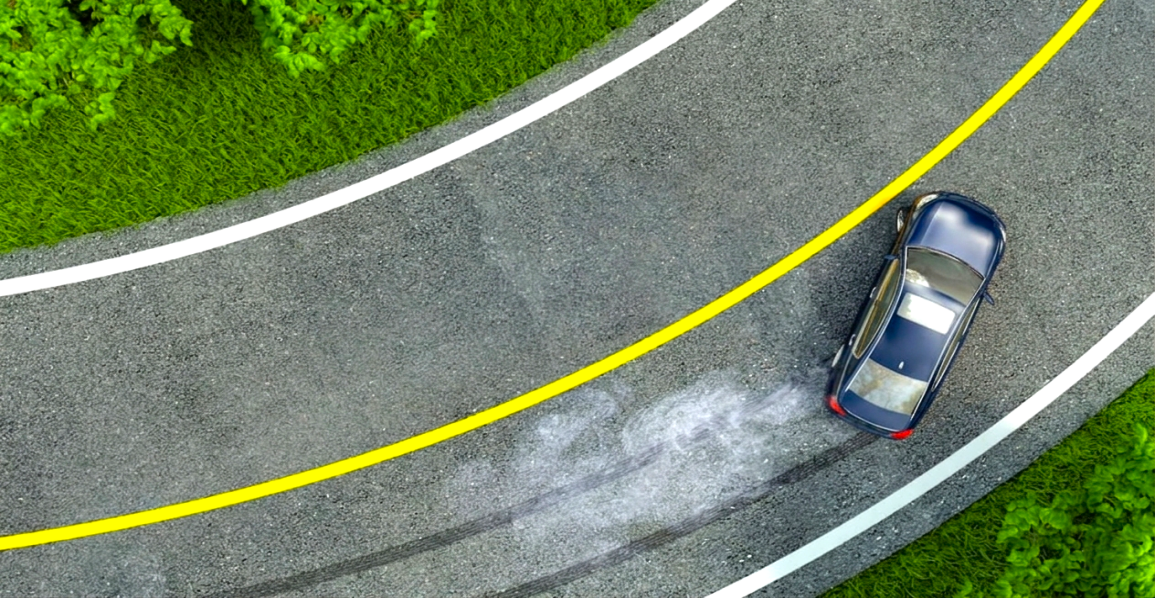
A car skid is one of the most frightening and dangerous situations a driver can encounter on the road. Even with the most careful driving style, a sudden change in road conditions—such as icing, wet pavement, or loose gravel—can instantly destabilize a vehicle.
Understanding the physics of the process and practicing defensive driving skills are critically important, as loss of traction leaves a driver with only seconds to make a decision. If your vehicle begins to skid you should remain calm; panic is the ultimate enemy of safety, turning a manageable situation into an inevitable accident. In this article, we will analyze in detail how to regain control of your vehicle and which actions will help you avoid critical mistakes.
What is a Skid and Why Does It Occur?
What's the main cause of skidding? A skid is a breach of a vehicle's directional stability, where one or both axles lose traction with the road surface and begin to slide. Physically, this is explained by the lateral force acting on the wheels exceeding the friction (grip) of the tires on the road.
Several factors provoke this dangerous phenomenon. Understanding these triggers allows a driver to adjust their driving style in advance. Key factors include:
- Loss of tire traction. When the tire's contact patch with the road is minimized, the car becomes uncontrollable.
- Slippery surfaces. Ice, packed snow, a film of water during rain (hydroplaning), or even a thin layer of mud after fog.
- Sudden maneuvers. Turning the steering wheel too sharply or aggressive braking mid-corner redistributes the vehicle's weight, stripping one of the axles of its grip.
- Excessive speed. Entering a corner at a speed that exceeds the allowable radius of curvature for current conditions.
- Technical condition. Worn tire tread, uneven tire pressure, or faulty shock absorbers significantly reduce stability.
However, it is worth remembering that the primary cause of a skid lies not only in physics but also in the incorrect distribution of torque and braking force by the driver under unstable surface conditions.
Types of Skids
To effectively combat a loss of control, it is necessary to classify what is happening. Depending on which axle has lost contact, skids are divided into three types.
The first type is front-wheel skid, also known among professionals as "understeer." In this situation, the front wheels slide straight ahead despite the steering wheel being turned into the corner. The car simply refuses to turn, tending to exit the track along a tangent.
The second type is rear-wheel skid, or "oversteer." This is the classic skid where the rear of the car begins to "fishtail" or swing outward. If action is not taken in time, the vehicle may spin 180 or even 360 degrees.
The third type is a four-wheel drift (sideways slide). In this case, all four wheels lose traction. The car begins to slide sideways, and controlling it becomes nearly impossible without specialized skills in rhythmic traction recovery.
How to Tell if Your Car is Starting to Skid
Recognizing the start of a skid at an early stage means increasing your chances of successfully regaining control. Modern cars often tip the driver off to the problem through tactile sensations and instruments.
A driver may feel the steering wheel go "dead" or become too light—this is a sure sign that the front wheels have lost grip. In the event of a rear-axle skid, the driver feels a jolt or a shift of the body to the side, as if someone is pushing the back of the car from the side.
Beyond physical sensations, keep an eye out for the following indicators:
- Visual displacement. The hood of the car points in one direction while the vehicle itself moves in another.
- Audible signals. Screeching tires (even on ice) or the noise of braking mechanisms engaging.
- Electronics. The ESP indicator (a car icon on a slippery road) starts flashing on the dashboard, signifying the activation of the stability control system.
If you sense even one of these signs, you must immediately cease any sudden actions with the pedals or steering wheel.
How to Recover from a Skid in a Front-Wheel Drive Car
Front-wheel drive is considered the most predictable for the average driver, yet it requires a specific reaction. The main issue here is the spinning of the front drive wheels.
If you feel a slide, adhere to the following steps:
- Smoothly take your foot off the gas pedal. Reducing power will allow the front wheels to regain their grip on the road. It is strictly forbidden to slam on the brakes—this will lock the wheels and turn your car into an uncontrollable sled.
- Point the steering wheel exactly where you want to go. As soon as the wheels regain traction, the car will obediently follow the steering. It is important to remember that a slight increase in throttle at the moment traction returns (if the rear axle is skidding on a front-wheel drive car) can help "pull" the car straight, but this requires surgical precision.
How to Recover from a Skid in a Rear-Wheel Drive Car
Rear-wheel drive requires more skill from the driver, as oversteer occurs most frequently in these vehicles. The engine transmits power to the rear wheels, which, during a skid, attempt to overtake the front ones.
The basic algorithm for rear-wheel drive is as follows:
- Steering. Immediately turn the steering wheel toward the skid (if the rear swings right, steer right). This helps align the trajectory.
- Throttle control. Unlike front-wheel drive, here you must smoothly release the gas pedal. Excess power on the rear axle only exacerbates the slide.
- Stabilization. As soon as the car begins to level out, return the steering wheel to the neutral position. The main mistake is being too late to return the wheel, which leads to a counter-skid in the opposite direction (a rhythmic skid).
The table below provides a brief comparison of actions for different drive types to make the information easier to digest:
Drivetrain Type | Throttle Action | Steering Action | Main Danger |
Front-Wheel | Ease off smoothly (or add a tiny bit to pull the rear straight) | In direction of travel | Front-axle plow (straight) |
Rear-Wheel | Release smoothly | Into the skid | 180-degree spin |
All-Wheel | Maintain steady or ease off smoothly | Corrective movements | Unpredictable reaction |
How to Recover from a Skid in an All-Wheel Drive Car
All-wheel drive often provides a false sense of security. Drivers assume that four drive wheels will save them in any situation. However, what is the primary cause of a skid in an all-wheel drive vehicle? It is precisely overconfidence, leading to excessive speed.
When skidding in an AWD vehicle, it is recommended to smoothly ease off the gas, but not completely, to maintain minimal tension across all wheels. You must use the steering wheel proactively, pointing the wheels toward the desired path. Most importantly, avoid jerky movements, as AWD reacts very sharply to them, and the car may begin to "fishtail" down the road with increasing amplitude.
What Not to Do During a Skid
Many human reflexes in a dangerous situation are the exact opposite of what you should do behind the wheel. Mistakes during a skid often prove fatal.
- Sudden braking. This is the most common and dangerous mistake. Locking the wheels robs them of the ability to direct the car. The vehicle simply continues to move according to the vector of inertia.
- Abruptly dropping or pinning the throttle. Any shock loads to the transmission trigger an instant break in tire traction.
- Erratic steering. Turning the wheel violently from lock to lock is guaranteed to result in a deep skid that even a professional cannot recover from.
- Panic. Freezing up or, conversely, closing your eyes robs you of the ability to control the situation. Remember: as long as the car is moving, you can influence it.
The Role of Safety Systems (ABS, ESP)
Modern electronics are a great achievement, but they do not override the laws of physics. The ABS (Anti-lock Braking System) allows you to brake and maneuver simultaneously by preventing the wheels from locking up completely. If your car is equipped with ABS, you should press the pedal as hard as you can during emergency braking—the system will handle the cadence braking for you.
ESP (Electronic Stability Program) is even more complex: it brakes individual wheels and throttles the engine to bring the car back to the path set by the steering wheel. However, if your entry speed into a corner is critically high or your tires are completely bald, even the most advanced ESP cannot create traction where none exists. Never rely 100% on electronics; they are there to assist you, not drive for you.
How to Prevent a Skid
Prevention is always better than a cure. To avoid finding yourself in a life-or-death struggle, follow these simple safety tips.
First, always choose tires according to the season. Winter tires have a soft compound that doesn't harden in the cold and a specific tread pattern to channel away slush. Second, maintain a safe following distance. This gives you time to maneuver if the car in front of you begins to skid.
Additional preventive measures include:
- Reducing speed before corners, not during them.
- Smoothly operating all controls (steering, gas, brakes).
- Regularly checking tire pressure.
- Avoiding driving in ruts filled with water or ice.
- Constantly monitoring the outside temperature.
Keeping your headlights and windshield clean also plays a role: the sooner you see a hazardous patch of road, the better your chances of smoothly driving around it.
What to Do After Recovering from a Skid
Once you have managed to stabilize the vehicle, the ordeal is not quite over. The driver's body is flooded with adrenaline at this moment, which can lead to excessively jerky actions in the minutes that follow.
To start, smoothly return to a normal speed. Check your surroundings: ensure you haven't created an obstacle for other road users. Be sure to listen to the vehicle's behavior. If the skid was severe and there was contact with a curb or deep snow, the wheel alignment might be off or a rim might be damaged.
If you feel a strong tremor in your hands or a racing heart, the best solution is to pull over in a safe place for 5-10 minutes. Drink some water and catch your breath. Continuing to drive in a state of high stress is dangerous, as your attention becomes blurred.
Conclusion
In summary, it is important to emphasize that road safety is a combination of a vehicle's proper technical condition and the driver's competent actions.
A skid is not a fatal sentence. It is a physical process that can and should be managed. Regular practice at specialized driving centers and a firm grasp of theory will allow you to make the correct movements second nature. Remember that a car skidding is always easier to prevent than to correct, so stay alert to the road surface and do not ignore electronic system warnings. Calmness, deliberate maneuvering, and adhering to the speed limit are your primary tools. Ultimately, if your car begins to skid, you must be the one who controls the situation, not its victim.

