



Top Car Batteries of 2026: Reliability, Capacity, and Longevity
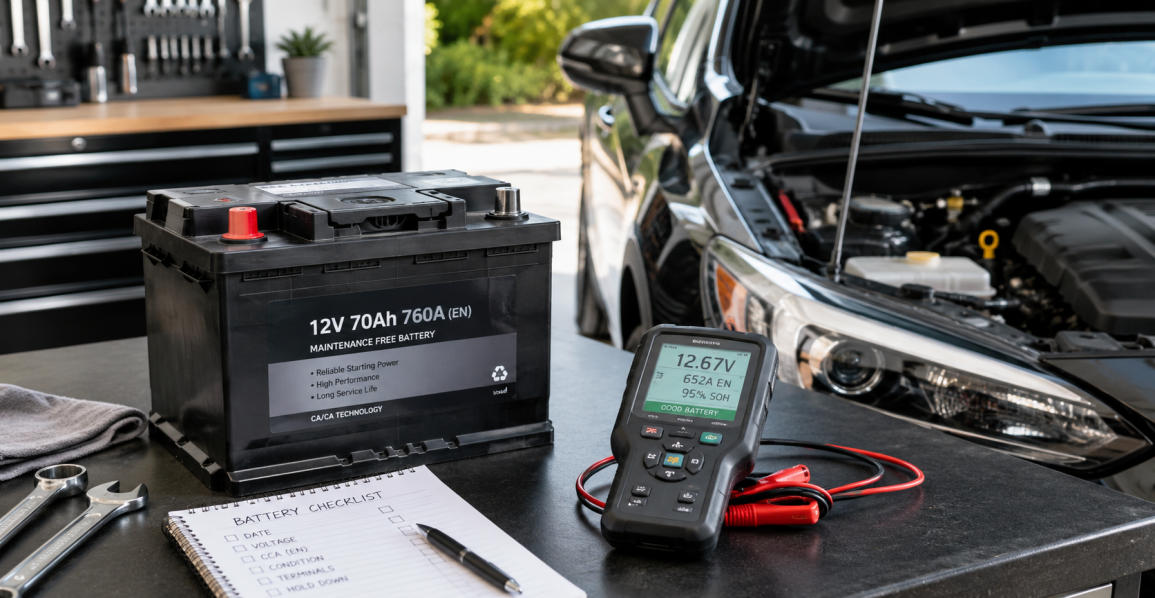
The car battery is the "heart" of any modern vehicle's electrical system. Its condition directly determines engine start-up and the stable operation of all electronic systems, from headlights to the onboard computer.
In 2026, battery manufacturing technologies have become even more reliable, yet choosing the right device remains a challenging task. In this article, we will examine the top car batteries currently on the market and explain how to select a model that ensures longevity and a confident start in any conditions.
What You Need to Know About Car Batteries

Before purchasing, it is essential to understand the core technical specifications. This will help you avoid incompatibility with your vehicle. The main parameters include:
- Capacity (Ah): The amount of energy a battery can store and deliver over a specific period.
- Cold Cranking Amps (CCA): The battery's ability to deliver a powerful burst of current at low temperatures. The higher this figure, the easier it is to start the engine in freezing weather.
- Size and Polarity: The physical dimensions of the casing and the layout of the terminals ("positive" on the left or right).
The market is dominated by standard lead-acid models and modern AGM/Gel batteries. Traditional batteries are more affordable but are sensitive to deep discharges. AGM (Absorbent Glass Mat) batteries are more resistant to vibrations and high loads.
Climate also plays a key role in a device's performance. Severe frost slows down chemical reactions and reduces available cranking power. Conversely, extreme heat accelerates internal plate corrosion and electrolyte evaporation. Regular battery health checks are critical for overall safety and travel reliability.
How to Choose the Right Battery for Your Car
The first step should always be to check the recommendations provided by your vehicle manufacturer. The service manual or handbook specifies the minimum electrical requirements.
When choosing, consider not only the power but also the design features:
- Mounting Type: The battery must be rigidly fixed in its designated spot. There are models with bottom mounting (using casing ledges) and top mounting (using a pressure plate).
- Power Consumption: If your car is equipped with a powerful multimedia system, dash cams, or a pre-heater, you should opt for car batteries with increased capacity.
- CCA Matching: Diesel engines require significantly higher CCA than gasoline engines of a similar displacement.
It is important to remember that excess capacity will not harm the alternator; instead, it provides an extra energy reserve for starting in critical conditions.
Criteria for Evaluating the Best Batteries
Strict criteria are used to compile an expert rating that determines product quality. We evaluate devices based on the following four areas:
- Reliability: How the battery performs after a year of use and whether it withstands sudden temperature fluctuations.
- Charge Retention: How quickly self-discharge occurs when the vehicle is left stationary for an extended period.
- Longevity: The actual service life in charge and discharge cycles before a significant loss of performance occurs.
- Resistance to External Factors: Casing leak protection and the ability to maintain plate integrity under heavy vibration on poor roads.
These parameters allow us to identify models suitable for both mild climates and harsh northern regions.
Top 10 Best Car Batteries of 2026

This list includes models that lead in technical specifications and independent test results.
Optima RedTop (AGM)
Specifications: 50 Ah, 800 CCA.
Advantages: Ideal for off-road vehicles. Features the highest vibration resistance on the market. Maintenance-free.
Varta Silver Dynamic AGM
Specifications: 70-105 Ah, up to 950 CCA.
Advantages: Designed for premium European cars with Start-Stop systems. Demonstrates an exceptionally long service life.
Bosch S5 A (AGM)
Specifications: 60-95 Ah, up to 850 CCA.
Advantages: High charge acceptance rate. Excellent for intensive city driving with frequent stops.
Odyssey Extreme Series
Specifications: 65 Ah, 950 CCA.
Advantages: Service life of up to 10 years. Capable of delivering massive current even at critically low charge levels.
Exide Premium Carbon Boost
Specifications: 64-100 Ah, up to 900 CCA.
Advantages: A special carbon additive in the plates allows the battery to charge 1.5 times faster than conventional counterparts.
ACDelco Gold (B24LS)
Specifications: 45-80 Ah.
Advantages: A stable and affordable choice for Japanese brands (Toyota, Honda). Features terminal corrosion protection.
Banner Running Bull AGM
Specifications: 70-105 Ah.
Advantages: Austrian quality. Withstands deep discharges without losing capacity, which is vital for specialized equipment.
Yuasa YBX9000 (AGM)
Specifications: 70-105 Ah.
Advantages: Japanese technology. Fully sealed construction ensuring maximum operational safety.
Mutlu SFB Technology
Specifications: 60-100 Ah.
Advantages: Utilizes silver in the plate grids. This model is highly popular where reliable car batteries in Cyprus and other hot regions are in demand.
DieHard Platinum AGM
Specifications: 60-95 Ah.
Advantages: Rugged casing design. The model is adapted for operation in extremely low-temperature environments.
Each of these models has passed certification and meets international quality standards. When choosing a specific brand, look for the availability of an official warranty in your region.
Comparison of Batteries by Key Parameters
A summary table is useful for a quick analysis of specifications. Below is a comparison of popular device types based on their performance qualities.
|
Battery Type |
Average Capacity |
Service Life |
Price |
Optimal Conditions |
|
AGM (Premium) |
High |
6–8 years |
High |
City, Start-Stop, powerful electronics |
|
EFB (Enhanced) |
Medium |
4–6 years |
Medium |
Modern mid-range cars |
|
Lead-Acid (SLI) |
Standard |
3–4 years |
Low |
Budget cars, highway driving |
The choice of a specific type should be based on your driving style. If you spend a lot of time in traffic jams, AGM has the advantage. If your route is primarily on the highway, a high-quality lead-acid model is sufficient. Keep in mind that price often correlates directly with the device's lifespan.
Advantages of Modern Batteries
By 2026, technology has significantly improved internal battery architecture. Modern devices possess several qualities that were previously unavailable:
- Increased Resistance to Deep Discharge: Modern AGM models can recover even after voltage drops to critical levels.
- Durability with Frequent Starts: This is critical for hybrid systems and vehicles with fuel-efficient engine modes.
- Extreme Temperature Performance: Innovative electrolyte compositions are less prone to freezing or boiling.
- Electronics Protection: Stable voltage prevents software glitches in onboard computers and sensors.
These advantages make today's best car batteries economically viable in the long term, despite their higher initial cost.
Common Mistakes When Choosing a Battery
Many owners make mistakes that lead to premature battery failure. The most common actions include:
- Buying Based Only on Price: The cheapest models often have thin plates that deteriorate within two years.
- Ignoring Dimensions: Even a slight deviation in size can prevent installation or damage wiring.
- Choosing the Wrong Type: Installing a conventional battery instead of an AGM in a vehicle with a Start-Stop system will cause it to fail within 3–5 months.
- Neglecting Terminal Care: Oxidized terminals create resistance, preventing normal charging from the alternator.
By avoiding these simple mistakes, you can save significant time and money on unscheduled maintenance.
How to Maintain Your Battery

To maximize the life of the device, you must follow preventive care rules. These recommendations apply to all battery types:
- Regular Charge Checks: Check the terminal voltage every six months. A value below 12.4V indicates the need for recharging with an external device.
- Terminal Cleaning: Remove deposits and corrosion. Use special dielectric lubricants to protect the contacts.
- Mounting Check: Ensure the pressure plate bolts have not loosened. Vibration is the primary enemy of lead plates.
- Avoiding Idleness: If the vehicle is not used for more than two weeks, it is recommended to disconnect the ground or use a maintenance charger.
Timely maintenance can extend the life of a quality battery by 1–2 years beyond its rated resource.
Impact of Extreme Conditions on the Battery
Weather conditions and driving patterns have a decisive influence on the chemical processes inside the battery.
In severe frost, capacity drops by nearly half. If a battery is only half-charged, the electrolyte can freeze, causing the casing to rupture. In hot climates (for example, if you operate car batteries in Cyprus), the main issue is water evaporation. This increases acid concentration and destroys internal components.
Driving patterns are equally important. Frequent short trips of 5–10 km do not allow the alternator to fully restore the charge spent on starting. In this mode, the battery remains in a state of "starvation," leading to plate sulfation. Conversely, long highway trips facilitate full charging and desulfation.
Is it Worth Choosing AGM/Gel Batteries over Conventional Ones?
AGM technology is more expensive than standard models, but it is justified in the following cases:
- Your vehicle is equipped with a Start-Stop system.
- The car has significant additional equipment (winches, high-power lighting, audio systems).
- You operate the vehicle in high-vibration or off-road conditions.
- The battery is installed in the cabin or trunk (AGM models do not emit harmful fumes).
If you have a standard city car without complex electronic systems, a high-quality lead-acid battery would be a more rational choice in terms of price and quality. However, for modern premium vehicles, there is practically no alternative to AGM.
Conclusion
The car battery remains a critical component upon which the health of the entire vehicle depends. In 2026, the choice should be based not on the brand, but on precise technical parameters and operating conditions. A correctly selected device will ensure a reliable engine start in the cold, stable multimedia performance in the heat, and a long service life without unnecessary expenses. Remember that timely diagnosis and choosing the right battery according to manufacturer recommendations are the best ways to protect your vehicle from sudden breakdowns. Timely battery replacement will help avoid costly repairs to the onboard electronics and ensure comfort on every journey.

