



Self-Driving Cars Myths Debunked: What AI Can and Cannot Do
The topic of autonomous driving has remained one of the most discussed in global media and among the general public over recent years. Artificial intelligence (AI) is rapidly penetrating the automotive industry, promising to radically change the way we move. However, many myths have formed around the idea of driverless transport, which often distort the true state of affairs.
Many consumers expect total independence from vehicles, while current technological capabilities have strict limitations. To understand what the best autopilot cars available on the market are, it is necessary to distinguish between marketing promises and the actual abilities of AI algorithms that assist drivers but do not yet replace them entirely.
Basic Levels of Autonomy

To classify the capabilities of automated systems, the international Society of Automotive Engineers (SAE) developed a six-level standard. Understanding this scale helps avoid confusion between auxiliary functions and full autopilot.
- Level 0. No automation. The driver fully controls all processes.
- Level 1. Driver assistance (adaptive cruise control or lane keeping).
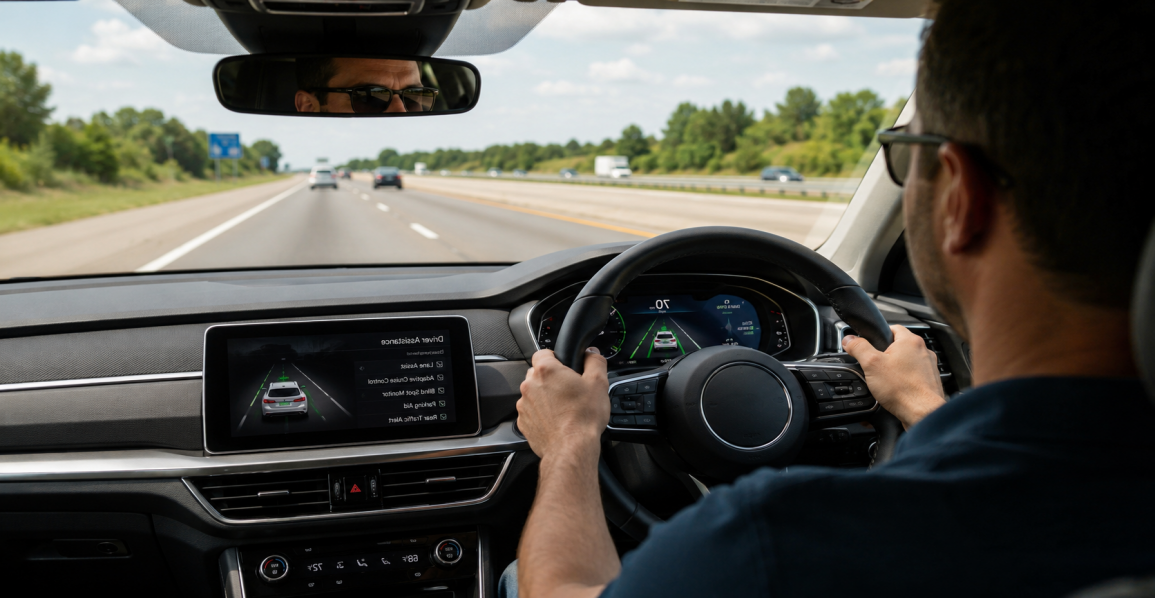
- Level 2 (Partial Automation). The vehicle can simultaneously control steering and speed, but the driver is required to constantly monitor the road and keep their hands on the wheel. Most modern systems belong to this level.
- Level 3 (Conditional Automation). The car takes control under certain conditions (e.g., in traffic jams on a highway), allowing the driver to be distracted but requiring an immediate return to control upon signal.
- Level 4 (High Automation). The car can move completely independently in designated locations (geofencing) without human intervention.
- Level 5 (Full Automation). The vehicle is capable of moving in all road and weather conditions without human participation and without manual control interfaces.
Many users mistakenly take Level 2 systems for a full autopilot due to the incorrect naming of software products by some manufacturers.

Myth: Autonomous Cars are Completely Safe
There is a widespread opinion that the implementation of AI will completely eliminate accidents on the roads. Reality is more complex: while such systems do reduce the proportion of risks associated with the human factor—fatigue, inattention, following distance violations, or driving under the influence—they simultaneously create new vulnerabilities.
The operation of autonomous transport depends on cameras, radars, lidars, mapping data, and information processing algorithms. Any failure in this chain can affect the machine's final decision. Difficulties arise in non-standard road scenarios: bad weather, poor markings, unexpected pedestrian behavior, road repairs, temporary signs, or unusual obstacles on the highway.
Instances are known where autopilot systems incorrectly interpreted the environment and failed to recognize overturned trucks lying across the lane or erroneously reacted to images and signs placed on advertising structures. The problem is that the algorithm acts only within the models and data on which it was trained. When a situation goes beyond the expected scenario, the risk of error increases.
A separate issue involves the transfer of responsibility. Even with a high level of automation, the driver must in many cases remain attentive and be ready to immediately take control. In 2026, human control remains a critically important element of safety, especially in complex urban environments and on roads with unpredictable traffic conditions.
For this reason, it is currently more accurate to view self-driving cars as a technology that improves safety and reduces the number of certain types of accidents, but does not guarantee the total exclusion of road incidents.
Myth: Cars Can Drive Without a Driver in Any Conditions
It is a common belief that modern driverless systems are capable of working equally effectively in any road setting. In practice, their level of reliability directly depends on external conditions. Lidars, radars, and cameras do allow the car to see the road, but each of these sensors has physical limitations. The quality of object recognition decreases during heavy rain, snowfall, fog, dirt on sensors, bright oncoming light, or poor markings.
AI operation is built on analyzing incoming data. If information from sensors arrives with interference, the system begins to perform worse at determining the distance to objects, lane boundaries, road signs, and the behavior of other road users. Situations on snowy highways, in construction zones, on rural roads, and in heavy urban traffic remain particularly difficult.
For this reason, in difficult weather conditions, many systems limit functionality, turn off, or hand over control to the driver. Fully autonomous movement without human participation is currently possible only in strictly defined scenarios where the road environment is highly predictable and controlled.
Myth: Autopilot Replaces the Driver Completely
Even the best cars with autopilot in 2026 are assistance systems, not replacements. Manufacturers emphasize that using these functions requires the driver to maintain concentration. There is a phenomenon of "loss of control" where the driver over-trusts the technology and stops monitoring the road situation, leading to a slowed reaction in an emergency. Modern motion assistants are limited to pre-programmed scenarios and do not possess creative thinking to resolve unique crisis situations.
Myth: AI Can Predict the Behavior of All Road Users
Machine learning algorithms are indeed capable of building forecasts based on probabilistic models, statistics, and an accumulated array of road scenarios. This approach works well in typical situations where movement develops predictably: for example, when a car stays in its lane, changes lanes along a clear trajectory, or slows down before a turn. However, the real road environment does not always obey the logic of templates.
The greatest difficulties arise when interacting with road users whose behavior changes abruptly and without clear preliminary signals. A pedestrian might unexpectedly step onto the roadway from behind a parked car, a child might run after a ball, a cyclist might suddenly shift to the side, or another driver might start a dangerous maneuver without a turn signal. These episodes are also difficult for a human, but a person is capable of considering context, intuitively reading intentions, and noticing non-verbal cues.
AI acts differently. The system analyzes trajectories, speed, object positions, and other formalizable parameters, but it does not understand human behavior the way another human does. The algorithm cannot fully interpret eye contact, gestures, a pedestrian’s hesitation at the edge of the road, or a hidden readiness for a sharp maneuver. For this reason, even advanced autonomous driving systems retain limitations in situations where human unpredictability takes center stage. It is currently impossible to completely exclude the risk of error in such conditions.
What Modern AI Systems Can Actually Do

Despite the myths, the real achievements of AI in cars are impressive and significantly increase comfort. Today, production vehicles successfully handle the following tasks:
- Adaptive Cruise Control. Automatic maintenance of distance to the vehicle ahead, including full stopping and starting in traffic jams.
- Lane Keeping. Trajectory correction to prevent unintentional drifting off the road.
- Emergency Braking. Recognition of obstacles and automatic activation of brakes to prevent a collision.
- Automatic Parking. Maneuvering in tight spaces using ultrasonic sensors and 360-degree cameras.
These functions process gigabytes of data in real-time, providing the driver with an additional layer of protection.
Limitations of Artificial Intelligence
One of the main problems remains the "edge case"—a rare situation that was not in the AI's training data. Complex urban intersections with temporary signs, roadworks, and traffic controllers often baffle the system. Furthermore, there is the problem of ethical choice and the limited speed of data processing during critical milliseconds. Sensors require regular calibration and cleaning, and software requires constant security updates to protect against cyber threats.
How Consumers Should Approach Autonomous Functions
For the safe operation of modern intelligent systems, owners are recommended to follow these rules:
- Study the manual. It is important to know exactly in which situations the manufacturer prohibits turning on the autopilot.
- Constant control. Always keep your hands on the wheel, even if the system is handling turns on its own.
- Gradual testing. Check the operation of new functions on familiar stretches of road with good markings.
- Skepticism. Do not rely on the system in conditions of poor visibility, or on wet or snowy roads.
Using technologies as an assistant tool significantly reduces the load on the driver during long trips, but does not remove legal and moral responsibility for safety.
Development Trends and Near-Term Prospects
The industry is moving toward the integration of V2X (vehicle-to-everything) technologies. This will allow cars to exchange data with traffic lights, road infrastructure, and other road users. In the coming years, growth is expected in the commercial transport segment, where self-driving trucks and taxis will operate on designated routes with a minimum of unpredictable factors. Artificial intelligence will become more sophisticated through the transition to next-generation neural networks capable of processing visual information faster.
Conclusion
Autonomous functions based on AI have already become a reality and provide substantial assistance, increasing road safety. However, at the current stage of development, full autonomy without human participation remains a technological ideal rather than a mass-market product. When considering the best self-driving car, it is important to remember that they are assistants expanding human capabilities, not replacing human intelligence. A deep understanding of the systems' real limits allows for the use of innovations with maximum benefit while minimizing the risk of accidents. In 2026, road safety still depends on the driver’s awareness and their ability to take control in a timely manner.

