



SUV Technology Trends 2026: Smart Features You Should Know About
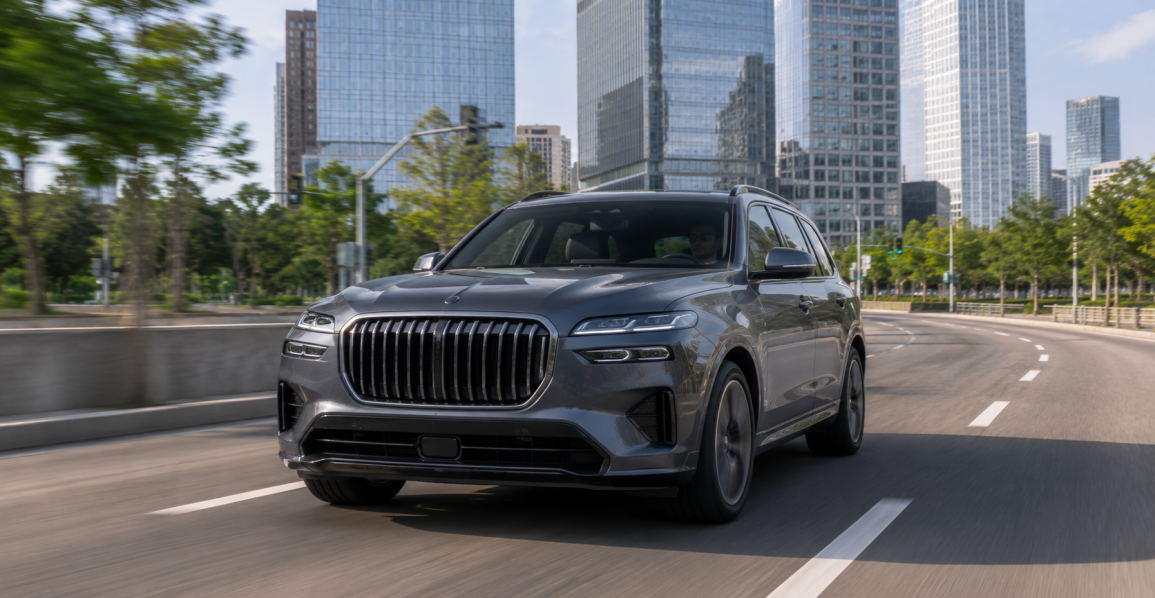
SUVs remain one of the most in-demand vehicle formats in the global market. According to the International Energy Agency, SUVs and pickup trucks accounted for about half of all global passenger car sales in 2023. That is exactly why automakers are focusing so heavily on this segment when expanding safety systems, digital services, efficiency, and comfort. In 2026, a good SUV is judged not only by ground clearance, cargo space, and pulling power, but also by how confidently its electronics work, how well the vehicle communicates with a smartphone, and how easy it is to live with every day. That is why it makes sense to look not only at the broader market, but also at how the Toyota SUV and the Mercedes SUV are evolving.

If all the marketing noise is stripped away, the picture becomes quite clear. The main directions for 2026 are more advanced driver assistance, smarter safety systems, a wider shift toward hybrid and electric versions, over-the-air software updates, more capable navigation, and a higher degree of personalization. This is especially visible in the latest examples such as the 2026 Toyota RAV4, the 2026 Toyota bZ, and the digital systems now being developed by Mercedes-Benz.
Below is a short summary that helps show right away what is changing in SUVs and why it matters to an ordinary owner.
|
Area |
What is changing in 2026 |
Practical benefit |
|
Driver assistance |
The vehicle is better at maintaining distance, staying in its lane, and helping in traffic jams |
Less fatigue in the city and on highways |
|
Safety |
More cameras, sensors, and warning systems |
Lower risk of minor and major accidents |
|
Electrification |
More hybrids, plug-in hybrids, and electric vehicles |
Lower fuel use or lower charging costs |
|
Multimedia |
Larger screens, voice control, smartphone connectivity |
Faster access to maps, calls, and settings |
|
Navigation |
Maps and traffic conditions update in real time |
More accurate and calmer route planning |
|
Personalization |
The vehicle remembers the driver, seat settings, climate preferences, and multimedia choices |
Fewer unnecessary actions before each trip |
This table is a concise summary of what Toyota, Mercedes-Benz, Apple, and Google are already demonstrating in their official materials on new models, navigation, and vehicle interfaces.
Semi-automated functions are becoming the norm

The biggest change in the SUV segment is that driver assistance systems are no longer an expensive extra included just to decorate a brochure. The new 2026 Toyota RAV4 comes with Toyota Safety Sense 4.0, which includes improved recognition of road conditions, lane centering, lane-change support, blind spot monitoring, rear cross-traffic alert, and assistance in heavy traffic. Mercedes-Benz is developing its own line of driving assistants and is separately promoting more advanced automation modes, including DRIVE PILOT for strictly limited conditions. For the buyer, that means something very simple: a modern SUV should not create extra complexity. It should reduce the burden of real driving.
What matters most in 2026 is no longer the mere presence of an assistant, but the quality of its work. A good system should keep the vehicle in its lane smoothly, follow traffic calmly, and avoid frightening the driver with abrupt interventions. That is why manufacturers are investing not only in sensors, but also in the logic of software control.
If we look at the most useful features for everyday driving, the most valuable ones are usually the following:
- adaptive cruise control that automatically maintains distance in traffic
- lane-centering assistance without constant harsh steering corrections
- traffic jam assistance on highways at low speeds
- automatic emergency braking when a collision risk is detected
- parking systems with a surround-view camera and automatic braking at low speed
When these features work together properly, the driver gets used to the vehicle faster and feels less tired even during ordinary weekday driving. For a family SUV, that is no longer a decorative equipment item. It is genuine convenience.
Safety is becoming smarter and less visible
Good electronic safety in an SUV now works by the principle that the vehicle notices danger earlier. In its new models, Toyota is focusing on surround-view cameras, blind spot monitoring, cross-traffic alerts, and parking sensors with automatic braking. Mercedes-Benz uses cameras, radar, and ultrasonic sensors, combining them into a single system that helps with lane changes, distance keeping, and parking. The better those systems are integrated, the calmer and more predictable the vehicle behaves.
Driver condition monitoring also deserves special attention. In its materials on the future of safety, Toyota discusses the development of technologies that monitor driver attention and what is happening inside the cabin. Mercedes-Benz already uses scenarios in which the vehicle can detect a lack of driver response and begin a controlled stop. That is an important change: electronics are no longer just warning the driver. They are trying to help in a critical situation.
In practice, the usefulness of intelligent safety is most obvious in ordinary road situations:
- when changing lanes and the driver cannot see a vehicle in the adjacent lane
- when reversing out of a parking space with limited visibility because of neighboring vehicles
- when fatigue builds up on a long trip and concentration starts to drop without the driver fully noticing it
- when maneuvering slowly in a tight yard or a crowded parking lot
The less noticeable these systems are and the more naturally they intervene, the higher the real value of the vehicle. The best solutions in 2026 work exactly that way.
Electrification is already influencing the entire SUV class
Another major trend is the transition of SUVs toward more efficient powertrains. Toyota has clearly stated that the 2026 RAV4 will have a fully electrified lineup, with hybrid and plug-in hybrid versions available. At the same time, the brand is developing its electric bZ direction: the updated 2026 Toyota bZ offers a range of up to 314 miles in certain versions, a new NACS charging port, and a more powerful onboard AC charger. That is an important signal for the market. Electrification is no longer limited to niche models and is gradually becoming standard even in the mainstream SUV segment.
This is where the Toyota SUV serves as a particularly useful example for the mass-market buyer. The brand is not simply adding electric versions. It is building a clear ladder of choice: a hybrid for those who want better efficiency without changing their routine, a plug-in hybrid for those who are ready to charge at home or at work, and a fully electric version for those who value zero local emissions and quiet driving. That approach makes the shift to new technology less abrupt and more practical.
In 2026, buyers no longer need to know only that a vehicle is “hybrid” or “electric.” It makes more sense to look at more practical details:
- the real driving range claimed for a specific version
- how long fast charging from 10% to 80% takes under suitable conditions
- which charging connector is used and how easy it is to find compatible charging stations
- whether the vehicle can recover energy during braking and downhill driving
These are the points that show whether a new powertrain is really suitable for ordinary life rather than just for a presentation.
Multimedia and smartphone integration are no longer secondary

Not long ago, multimedia in an SUV was treated as little more than a screen for music and navigation. In 2026, that has changed. The 2026 Toyota bZ comes standard with a 14-inch screen, and Toyota’s newer models are developing their own multimedia platform with voice control, user profiles, and over-the-air updates. Mercedes-Benz is developing MBUX as a deeper digital environment in which the vehicle suggests relevant functions, stores settings in a profile, and gradually expands its capabilities through software architecture and cloud-based services.
At the same time, the market is evolving not only through automakers themselves. Apple introduced the next generation of CarPlay Ultra in 2025. It can work not only on the central display but also on the instrument cluster, and it can receive data from the vehicle itself. Google, for its part, is expanding Android Auto and moving voice assistance toward a more conversational format with Gemini. For the driver, that means the connection between phone and vehicle is becoming deeper: route planning, messaging, music control, and some vehicle functions can all be handled more quickly and more clearly.
If these systems are to be truly useful, a good SUV should ideally offer the following:
- stable support for Apple CarPlay and Android Auto
- voice control that works without long and unnatural commands
- the ability to update maps and functions without visiting a service center
- driver profiles that store seat settings, climate preferences, and multimedia choices
When that is done properly, the vehicle stops irritating the user with awkward menus and starts functioning as a clear digital tool. For the modern audience, that is already an important part of comfort.
Cabin comfort has become more technological
Comfort in an SUV is no longer built only around soft seats and generous space. In its newer models, Toyota focuses on heated and ventilated seats, driver’s seat memory, large displays, wireless charging, and more advanced climate control. Mercedes-Benz strengthens this approach through personal profiles, thoughtful interface logic, and premium solutions for sound and lighting. As a result, the cabin functions not simply as a collection of options, but as an adaptive environment for a specific person.
Owners notice that most clearly in small details. The vehicle recognizes the driver and restores seat position, climate settings, and favorite multimedia preferences. In a family where several people use the same car, that level of personalization already has a noticeable practical effect. Less time is spent preparing for a trip, there are fewer annoying compromises, and the overall comfort level is higher.
Technologies for poor roads and difficult weather are becoming more precise
SUVs are still purchased not only for a higher seating position, but also for confidence beyond perfect pavement. The 2026 Toyota Land Cruiser retains a serious set of off-road features, including full-time four-wheel drive, low range, locking differentials, and terrain-specific driving modes. In more road-focused models, the emphasis is placed on intelligent torque distribution and electronic support on slippery, wet, or loose surfaces. What matters is that modern systems are becoming less crude and more precisely adapted to real conditions.
That is why the SUV of 2026 is no longer judged simply by whether it has all-wheel drive. Much more important is how the vehicle starts on an incline, how it behaves on a wet road, how calmly it crosses a damaged section of road, and whether it can restrain wheelspin at the right moment. Electronics are not there to replace experience. They are there to reduce the number of mistakes and make the vehicle more predictable.
In real use, the most valuable solutions usually include:
- assistance during descents and hill starts on difficult surfaces
- traction and stability control on snow, ice, and mud
- several driving modes adapted to different types of terrain
- tire pressure monitoring that helps detect a problem before it becomes serious on the highway or under load
These are the functions that rarely look dramatic in advertising, yet they are often the ones that save a trip when the road turns out worse than expected.
Navigation is learning to think together with the vehicle
Navigation in a modern SUV is no longer limited to a map and a voice saying “turn right in 300 meters.” Mercedes-Benz has long been developing online map updates, real-time traffic data, hazard information, and route planning that takes the needs of electric vehicles into account. Within the brand’s ecosystem, navigation is also linked to charging infrastructure and can factor charging stops into the route. That is an important shift: navigation is becoming part of the vehicle’s overall operating logic.
This is also where the Mercedes SUV clearly shows the direction of the segment. For the brand, navigation is no longer a separate function. It is gradually being integrated with driving assistants, the digital assistant, cloud services, and the owner’s personal habits. In Mercedes-Benz materials on MB.DRIVE and MBUX, there is already a visible effort to combine routing, vehicle behavior, and driver prompts into a more unified system.
For electric and plug-in hybrid SUVs, this matters even more. If the navigation can account for charge level, station availability, and traffic conditions, the driver travels with more confidence and understands the route better. That is precisely the kind of approach that will separate more mature models from merely well-equipped ones in the near future.
Eco-friendly materials and resource efficiency are becoming part of the class
The issue is no longer only fuel use or battery consumption. Mercedes-Benz officially uses fabrics made from recycled plastic bottles in some models, as well as floor-covering materials made from recycled carpets and fishing nets. The company specifically highlights a growing share of recycled materials in its new vehicles. That is no longer an unusual environmental showcase. It is gradually becoming a standard approach.
That matters for two reasons. First, buyers increasingly see a vehicle not just as a bundle of specifications, but as a product with a clear production philosophy. Second, resource efficiency is becoming more tightly connected to software control: the vehicle needs to manage energy intelligently across climate control, charging, lighting, and driving. That is why environmental progress in the 2026 SUV class is already a combination of powertrain, materials, and software-based efficiency.
How to choose an SUV with modern technology
When buying a vehicle in 2026, it is better to filter out the unnecessary features immediately and focus on what actually affects daily driving. The longest options list does not always mean the best choice. Sometimes a simpler version with well-tuned assistants, convenient navigation, and a clear multimedia system will prove more practical than an expensive trim overloaded with questionable functions. That becomes especially important when the vehicle is expected to serve for many years.
Before making a decision, it helps to go through a short checklist:
- check how calmly and clearly lane centering, adaptive cruise control, and automatic braking work
- make sure the vehicle offers convenient smartphone integration and good voice control
- find out whether the vehicle supports over-the-air updates and how often the maps are refreshed
- for a hybrid or electric model, assess not only the official figures but also the practicality of charging in real routes
- test the assistants and parking functions during a drive instead of choosing them only from a brochure
This approach helps reveal right away whether a specific model matches real tasks: city use, long-distance travel, family driving, rural roads, or mixed conditions. And the more complex these technologies become, the more important it is to check not the manufacturer’s promises, but your own experience behind the wheel.
In the end, SUVs in 2026 are becoming noticeably smarter, safer, and easier to live with every day. But the best choice depends not on the number of screens or the loudest function names. It depends on how completely the vehicle solves the owner’s everyday needs. If the market is viewed in that way, it becomes obvious that a modern SUV is no longer just a tall body style with all-wheel drive. It is a complex digital system. Against that background, the way the Toyota SUV and the Mercedes SUV are evolving becomes especially revealing: one emphasizes understandable practicality and a gradual shift toward new technology, while the other pushes deeper digital integration, personalization, and automation.

