



How to Spot a Flood Damage Car Before You Buy
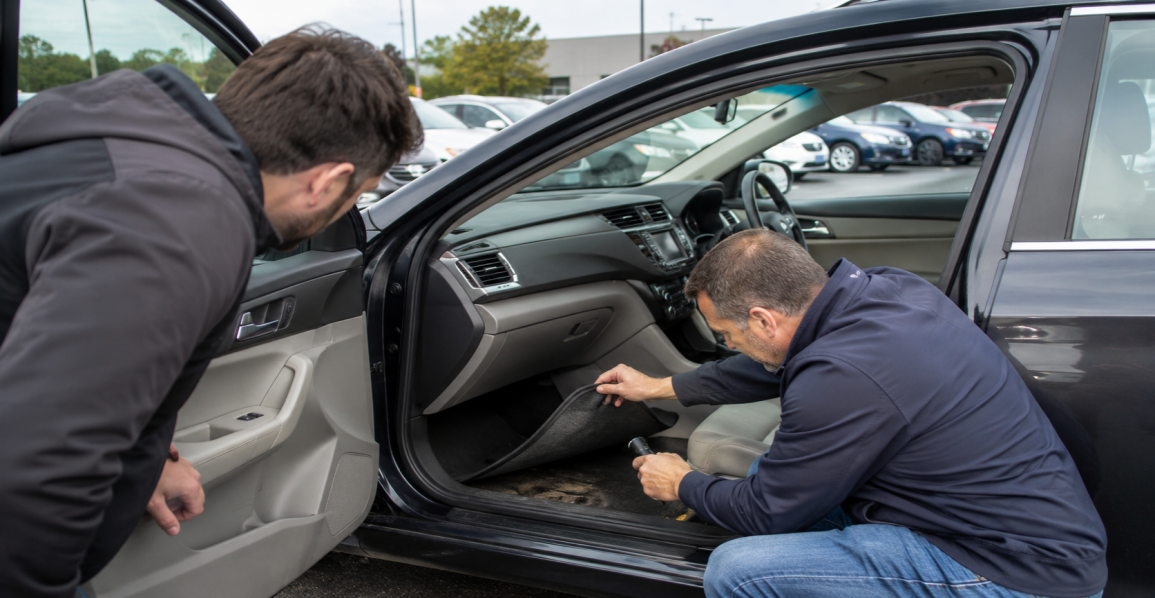
A flood damage car can look clean, functional, and very attractively priced. In reality, that kind of purchase often leads to electrical issues, corrosion, safety risks, and expensive repairs. That is why a flood-damaged vehicle is one of the riskiest options on the used car market.
The main problem is that water damage is not always obvious right away. The interior can be cleaned, the smell can be partially masked, errors can be cleared, and some traces can be hidden with cosmetic repairs. In this article, we will explain how to spot a flood damage car before purchase, where these vehicles are most often found, and what you should check first.
What Is a Flood-Damaged Vehicle and Why Is It Dangerous
A flood-damaged vehicle is a car that has been exposed to enough water to damage its systems, wiring, interior, or body. This can happen because of a flood, a heavy storm, a hurricane, a flooded parking area, or long-term exposure to standing water.
The main danger is that water affects several systems at once. It causes metal corrosion, damages electrical contacts, leaves contamination in hidden cavities, and accelerates wear in parts that may appear to work normally at first. These effects are especially dangerous in modern vehicles because of their electronics. The more complex the car, the higher the risk of hidden failures.
For the buyer, there are four main problems:
- unpredictable breakdowns;
- electrical failures;
- ongoing repair costs after purchase;
- safety risks.
That is why damaged cars after flooding often turn out not to be bargains, but sources of long and expensive repair chains.
Where These Vehicles Most Often Appear
These vehicles most often appear on the market after major floods, hurricanes, and severe storms. That does not mean you can find them only in the affected region. A flood-damaged car is often resold in another state or even another country to remove its direct link to the disaster.
Another high-risk area is auctions, insurance write-offs, and resale through intermediaries. After an insurance payout, a vehicle may be classified as a total loss, then go through superficial preparation, and return to the market as an ordinary used car.
You should be especially cautious in three situations. First, if the vehicle came from a region that recently had flooding. Second, if the price is noticeably below market value without a clear explanation. Third, if the seller avoids direct answers about where the vehicle came from and what happened to it.
Visual Signs of a Flood-Damaged Vehicle

Do not start with the body. Start with small traces that are harder to hide. After water exposure, cars often show signs that are not linked to major mechanical wear but point clearly to previous flooding.
Check for:
- water marks or stains on upholstery and plastic trim;
- rust on seat mounts and metal interior components;
- dirt or sand under the seats and in the trunk;
- foggy, cloudy, or damaged headlights;
- unusually clean areas next to dirt in hard-to-reach places.
Pay special attention to storage compartments, the spare-wheel well, under the floor mats, around the seat belts, in plastic joints, and in the trunk. These are the places where traces of water and silt often remain the longest.
If the interior looks too fresh for the age of the car, that is also a reason to be cautious. New upholstery, partially replaced plastic trim, or fresh carpet do not prove anything by themselves, but together with other signs they become suspicious.
Smell as an Important Indicator

Smell is one of the most useful indicators during inspection. After flooding, the cabin often keeps a damp, musty, or moldy smell. Even if the vehicle has been cleaned thoroughly, it is difficult to remove that odor completely.
Sellers often try to hide it with air fresheners, deep interior cleaning, and strong perfume-like treatments. That is why an overly strong pleasant smell in a used car is not a plus. It is a reason to inspect the car more carefully.
Open the doors and trunk, stand next to the vehicle for a few seconds, then sit inside and let the smell settle naturally. If you notice dampness or a heavy sweet odor that seems to be masking something, do not ignore it.
Checking the Interior
The interior often tells you more than the exterior. Start with the carpets, seats, and trim. Lift the floor mats and check for traces of moisture, uneven color in nearby sections, and areas that feel too stiff or suspiciously new.
Inspect the buttons, switches, seat controls, connectors, and small control elements. After water exposure, they often begin to work inconsistently, stick, or look more worn than nearby parts. Uneven wear matters a lot here. If one part of the interior looks new and another looks old, that needs to be explained through inspection, not guesswork.
Also check the seat belts. Water traces, stains, uneven color, or poor retraction can point to previous flooding.
Electronics and Hidden Problems

Electronics are some of the most vulnerable parts of a flood-damaged vehicle. After water exposure, some systems may work normally during inspection but begin to fail later. That is one of the reasons why common problems with flooded cars often appear not immediately after purchase, but weeks or months later.
Pay attention to the instrument cluster, infotainment system, power windows, central locking, climate control, lighting, and sensors. If something turns on with a delay, reboots, works inconsistently, or behaves illogically, that is already a serious warning sign.
Water is especially dangerous for modern vehicles for three reasons. First, there are now far more control modules and connectors in a car than before. Second, some issues are invisible without proper diagnostics. Third, even after repairs, moisture-related damage can come back as intermittent faults and random failures.
That is why, at the slightest suspicion, you should not just look at the vehicle. You should connect it to diagnostics and inspect it more deeply.
Under-the-Hood Inspection

The engine bay needs to be checked just as carefully as the interior. After flooding, it often keeps traces that are not always fully removed. Inspect metal parts, fasteners, connectors, terminals, and areas around the wiring. If you see corrosion, traces of silt, sand, or unnatural dirt in seams and joints, that is a serious reason to be concerned.
Check the wiring separately. After water exposure, insulation, contacts, and connectors may look normal but work inconsistently. Oxidation, green residue, white deposits on contacts, and unevenly cleaned areas in the engine bay are especially suspicious.
Also inspect service items. The condition of filters, fluids, and reservoirs does not provide a full guarantee, but it can reveal indirect signs. If everything under the hood has been washed to a shine but dirt remains in hard-to-reach places, that also looks suspicious.
Checking Documents and Vehicle History

You should never buy this kind of vehicle without checking its history. Even if it looks normal visually, documents and VIN data may show what an inspection cannot.
Start with the VIN. Check the insurance claim history, write-off records, notes about serious damage, and any auction history. One source is better than nothing, but it is not enough. You need to check the vehicle through several databases.
Pay attention to three things:
- whether there were insurance payouts after flooding or major damage;
- whether the vehicle went through a write-off or salvage auction;
- whether the ownership history matches what the seller tells you.
If the seller avoids VIN checks, refuses to provide documents in advance, or becomes irritated by your questions, that alone is a warning sign.
Test Drive as a Way to Detect Problems
You should not consider this kind of car without a test drive. Even if it looks neat, some problems appear only in motion.
During the drive, watch for unusual noises, vibrations, electronic issues, and warning lights on the dashboard. Check how the power windows, climate control, infotainment, lighting, camera, parking sensors, and central locking work. If something begins to glitch, shut off, or work inconsistently while driving, that is already an important sign.
Also pay attention to the vehicle’s overall behavior. Rough engine operation, random warning lights, unstable electronic response, and strange glitches with no clear reason are often found in vehicles that have already been exposed to water.
Common Seller Tricks
Sellers of these vehicles rarely talk about the problem openly. More often, they try to remove the most visible signs and make the car look attractive.
The most common tricks are:
- deep interior detailing;
- replacing part of the carpet, upholstery, or plastic trim;
- heavy use of air fresheners;
- clearing fault codes before the showing;
- offering a below-market price to push a quick decision.
Each of these signs alone proves nothing. But if you see several of them together, the vehicle needs much more careful inspection.
How to Protect Yourself When Buying
The main rule is simple: do not make a decision based only on how the car looks or what the seller says. If you have even the slightest doubt, bring in a specialist.
Before buying, do four things:
- check the vehicle history through several sources;
- show the car to an independent specialist;
- perform a full inspection of the interior, electronics, and engine bay;
- do not agree to a deal without time for proper checks.
Buying from a reliable seller also lowers the risk, but it does not replace verification. Even an official dealership or a careful private seller does not guarantee that the car has no flood history.
Is It Worth Buying a Flood-Damaged Vehicle
Sometimes buyers do consider this option because of the price. In theory, it can make sense if the vehicle’s history is completely transparent, the level of damage is clearly understood, the car has already been professionally inspected, and the buyer fully accepts all the risks.
In practice, however, this is a rare scenario. Even after repairs, such a car may still have hidden consequences: corrosion, intermittent faults, contact problems, and recurring errors. That is why a flood-damaged vehicle is suitable only for people who understand the technical risks well, are prepared for extra costs, and are buying the car with a very large discount.
If you need a regular car for daily use without the constant risk of unexpected breakdowns, it is usually better to walk away.
Conclusion
A flood-damaged vehicle can look normal for a long time while hiding serious problems that appear later. Water does not damage just one part. It affects several systems at once, and some consequences become visible only over time.
That is why the buyer’s best protection is a careful inspection. Check the interior, smell, electronics, engine bay, VIN history, and always do a test drive. The more closely you inspect the car, the lower the risk of buying damaged cars with costly hidden defects.
The main conclusion is simple: common problems with flooded cars almost always cost more than they seem to at the time of purchase. If you have doubts about the vehicle’s history, it is safer to walk away than to pay later for someone else’s problem.

